
New Feature: Dynamic Backlog Management
.png)


.png)
.png)
In AppSec, yesterday’s low-priority risk can become today’s critical vulnerability. Enter Dynamic Backlog Management, an AppSec industry-first innovation from Arnica that fundamentally changes how modern security teams manage historical risks.
With Dynamic Backlog Management, your risk triage process evolves as the context does. New CVE published? A fix becomes available for an old vulnerability? Severity updated due to NIST or KEV portfolio guidance? Arnica automates the response.
With Dynamic Backlog Management, your security response becomes adaptive, automated, and continuously aligned with risk reality.
🧠 Smart Triage for the Modern AppSec Team
This isn’t another backlog tag manager. Arnica’s Dynamic Backlog Management:
- Combines real-time code scanning and historical backlog awareness
- Automates alerting, ticketing, and re-triaging based on real-world risk evolution
- Closes the gap between the code you’re writing today and the risk you inherited yesterday
Customers already using it have described it as a “push instead of pull” transformation and are no longer reliant on developer muscle to revisit stale tickets. It’s already saving teams hours of manual effort and ensuring no creeping vulnerability goes unnoticed.
🔄 Automatically Reopen Findings and Initiate Action
Security teams can now configure Arnica to automatically reopen findings and trigger downstream actions such as alerts, ticket creation, or workflow updates when contextual changes occur in risk posture. This includes:
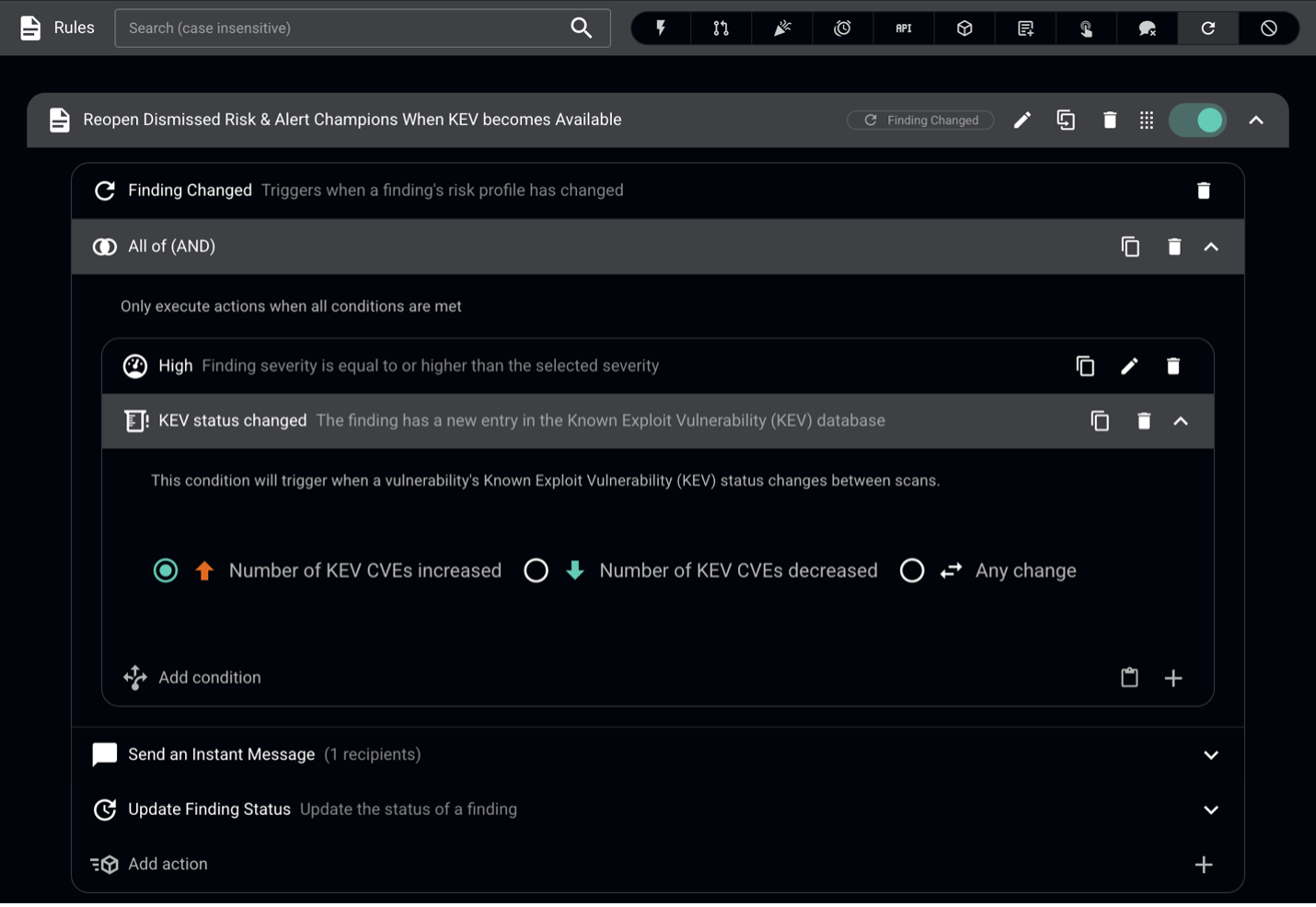
- KEV (Known Exploited Vulnerabilities) Listing: If a previously dismissed or deprioritized CVE becomes part of the CISA KEV catalog, Arnica detects the update and reactivates the finding for your team to review.
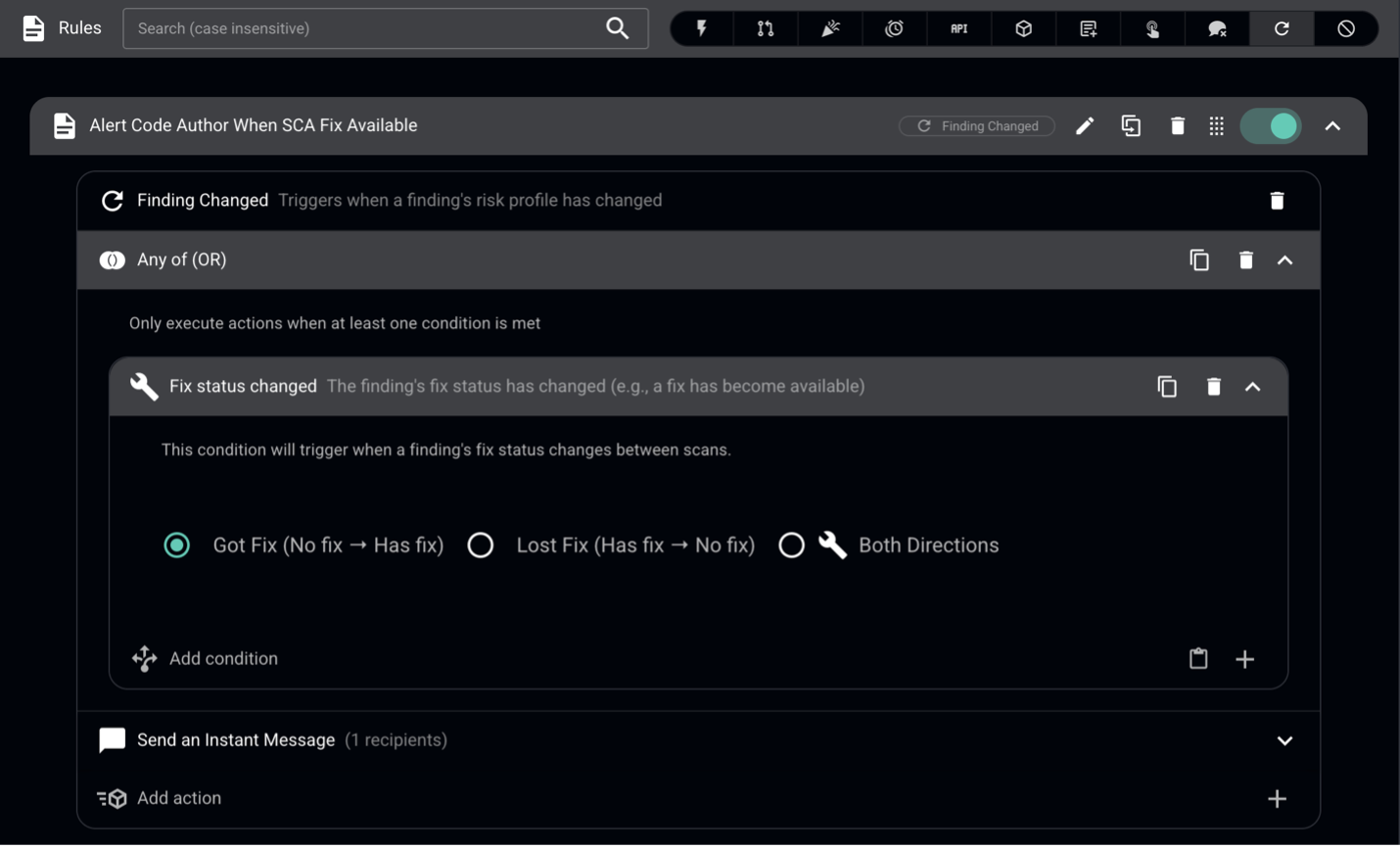
- Fix Availability Changes: When a vulnerability that had no fix available at the time of triage now has a known patch or remediation, Arnica identifies the shift and can reopen the issue then notifies developers or creates tickets accordingly.
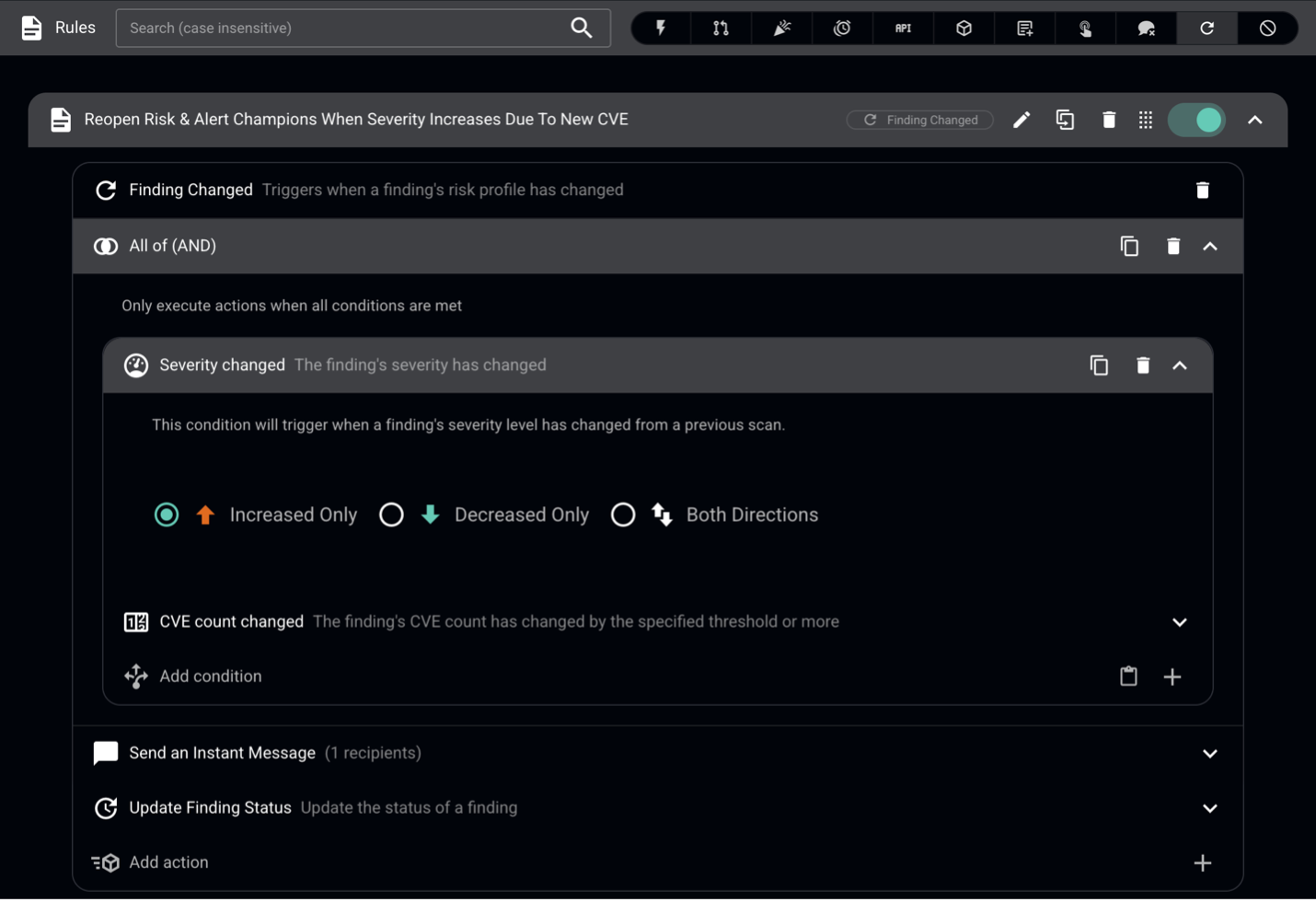
- Severity Escalation: If a code risk severity rating increases, whether due to new threat intelligence, new CVE with higher severity publication, changes in CVSS scores, or vendor advisories, Arnica detects and acts on it without requiring manual review.
⚙️ Customize Re-Alerting Policies Based on Risk Context
Security teams can define granular, policy-driven rules that monitor changes to findings in the backlog. Whether you want to track risks that become reachable, exploitable, or newly linked to active threat campaigns, policies can be tailored to your organization’s risk appetite and operational priorities. These policies operate passively in the background and activate only when material conditions are met.
🧵 Push Risk Updates Directly into Developer Workflows
Context-aware risk updates are sent through the channels developers already use including Slack, Jira, and other integrations, ensuring findings don’t get buried in dashboards.This means no more missed remediations or overlooked regressions. Developers are notified only when action is warranted, keeping their focus sharp and their queue clean.
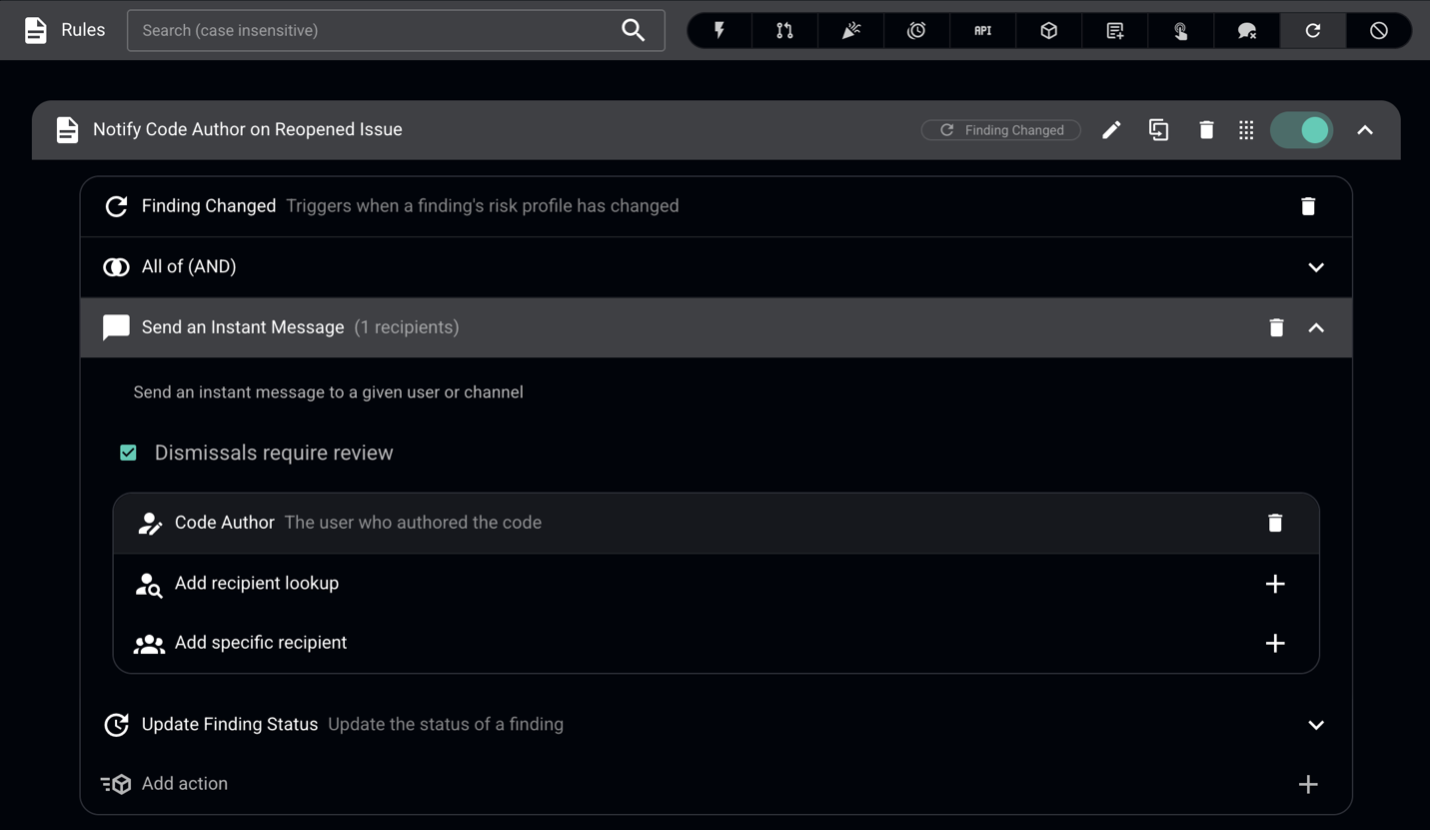
🔍 Enable Automated, Continuous Triage as Context Changes
Findings evolve, and now, so does your triage process. Dynamic Backlog Management enables ongoing assessment of historical risks, allowing Arnica to promote or suppress issues automatically as their associated meta data, exploitability, or severity changes. It’s like giving your backlog a brain, one that’s constantly re-evaluating threats and helping your team focus only on what truly matters.
No more relying on humans to periodically re-scan dashboards or manually revisit stale issues. Arnica’s automation ensures your team is notified the moment a finding becomes important again, closing the loop between triage and resolution in a way that’s never been done before.
🥇 The Only One of Its Kind
No other solution in the market automates contextual updates to historical findings.
- Others may scan your code.
- Others may alert you once.
- Others will dismiss code risks forever.
Only Arnica continuously monitors and automatically re-engages your team when historical risk becomes present danger.
From critical risk additions to KEV, to new patches surfacing for dormant vulnerabilities; your backlog just got smarter, leaner, and actionable.
💡 Closing the Loop: Real-Time + Backlog = Complete Coverage
You already trust Arnica to handle real-time code changes. Now, let Arnica close the loop, bringing intelligent, automated vigilance to your existing risk backlog. Because your attack surface doesn’t end with your latest commit, and neither should your security posture.
Get Started by logging into Arnica and setting up a Dynamic Backlog Policy, or contact our customer success team for assistance.
Reduce Risk and Accelerate Velocity
Integrate Arnica ChatOps with your development workflow to eliminate risks before they ever reach production.