
APPLICATION SECURITY • SDLC

The Pen Test Was Built for a Different Development Cycle.

AI is changing how software gets built. Code is generated, changed, and shipped faster than ever, but penetration testing often remains a periodic exercise.

Security teams need security practices that keep pace with development and help them focus on the risks that matter most.

Talk to Arnica

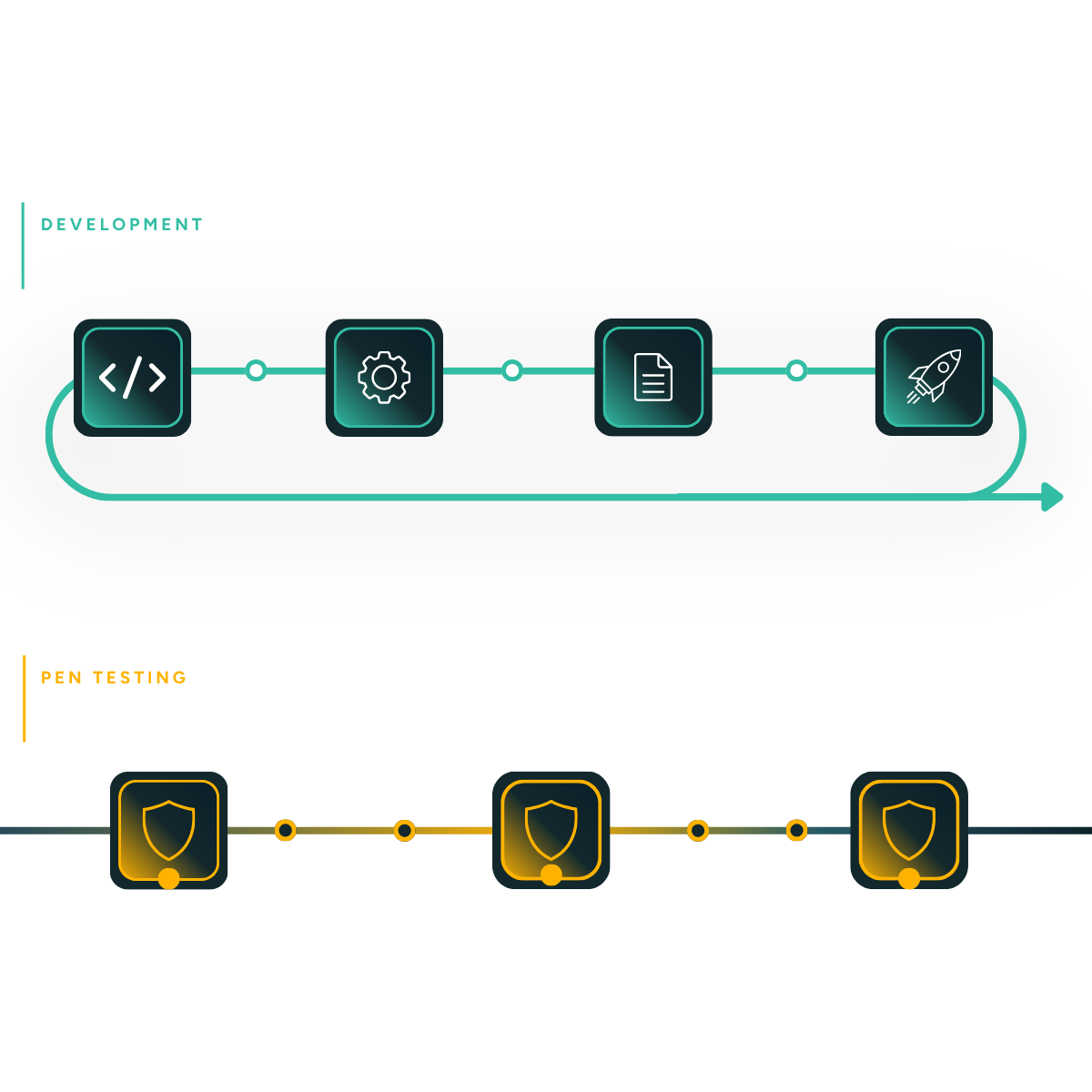
Development moves continuously. Testing often doesn't.

White outline of a square with rounded corners containing a code tag symbol and three sparkling stars, representing clean or polished code.
AI accelerates development

AI coding tools are changing how quickly teams generate, modify, and ship software.

Icon of a person with a laptop and coding symbols, representing programming or software development.
Testing happens in intervals

Traditional penetration tests often assess an application at a point in time, while the code and attack surface continue to change.

White magnifying glass icon symbolizing search or zoom function.
Finding risk isn't the whole story

Identifying a vulnerability is important. Understanding its potential impact and exploitability helps teams make better security decisions.

Three white horizontal rectangular blocks arranged vertically with arrows connecting them, representing a flowchart or process sequence.
Prioritize the risks that matter

More code and more findings don't automatically mean better security. Teams need context to distinguish exploitable, high-impact risks from issues that can wait.

Prevention matters. Validation matters, too.

Finding and fixing vulnerabilities early reduces risk, but no single security activity tells the whole story. Teams also need to understand how weaknesses could be exploited, how they affect the application, and which issues deserve attention first.

As AI accelerates development, security needs to account for both the speed of change and the real-world risk that changes introduce.
01
PREVENT →
Establish secure development practices and apply security rules to AI-assisted coding workflows.
02
DETECT →
Identify security issues across code and development workflows, with context to help teams prioritize risk.
03
VALIDATE →
Penetration testing helps assess whether weaknesses can be exploited and what they mean for application security.
04
REMEDIATE
Give developers actionable findings and relevant context so security issues can be addressed within their existing workflows.

Bring security into every stage of development.

Bring security into the entire development lifecycle—from the AI agent generating code to the developer responsible for fixing it.

SEE ARNICA IN ACTION
Thanks for submitting the form.