
What Are the Best Software Supply Chain Security Tools in June 2026?


.png)
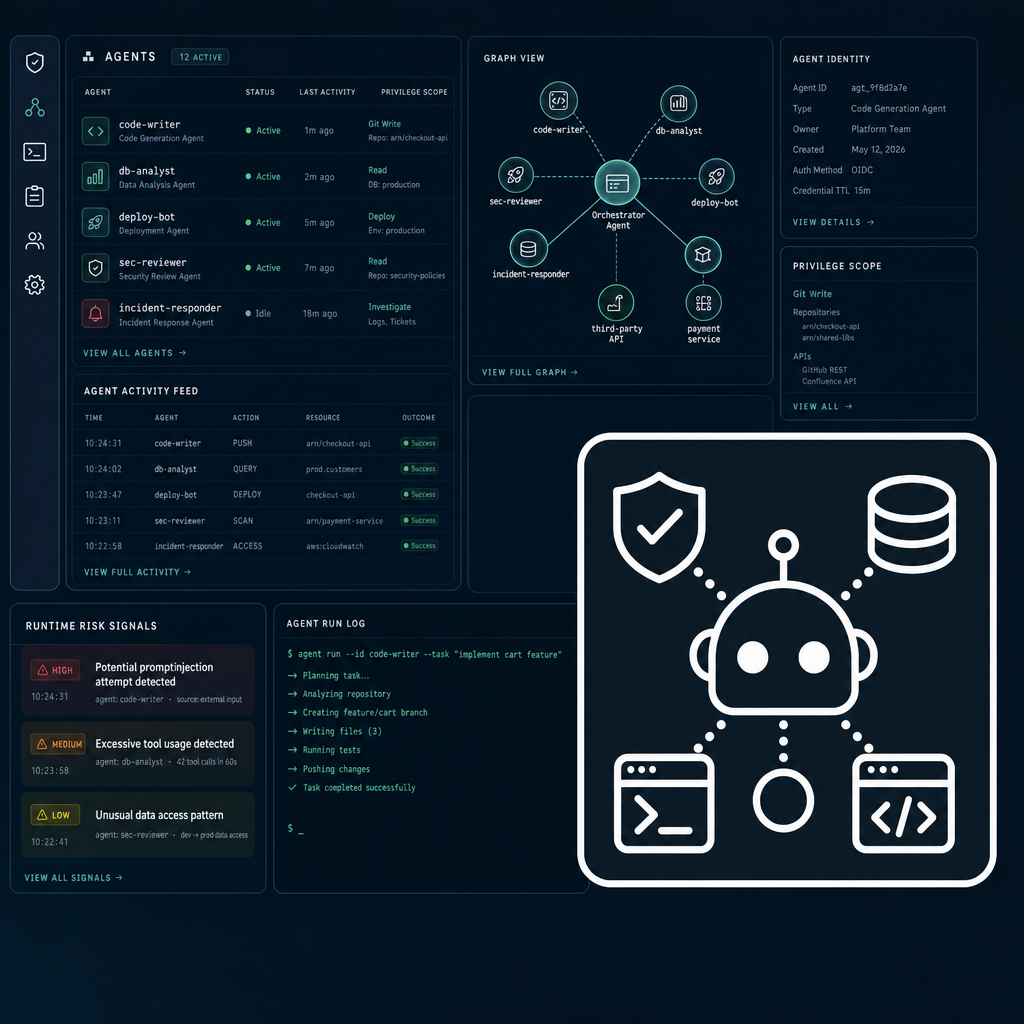
Everyone scans code, but software supply chain security tools focus on what you didn't write: the dependencies, packages, and build infrastructure that make up most of your attack surface. Traditional application security tools stop at your team's commits. Supply chain security tools track every external component, generate SBOMs that stay current, and catch vulnerable dependencies before they ship. In 2026, the tools worth using also govern AI-generated code at the source and route findings based on actual developer identity. We ranked them on coverage, not feature lists.
TLDR:
- Supply chain tools secure dependencies, pipelines, and build infrastructure beyond your code.
- Pipelineless tools cover 100% of repos without CI/CD gaps where agents never get installed.
- Function-level reachability cuts SCA noise by showing if vulnerable code paths actually run.
- Identity-aware routing resolves findings to specific developers instead of teams or file owners.
- Arnica governs code at generation, including what AI agents write, before commits reach repos.
What Are Software Supply Chain Security Tools?
Software supply chain security tools are purpose-built to identify, track, and reduce risk across the external code, dependencies, and services that flow into your applications. Where traditional application security tools focus on the code your team writes, supply chain security tools go a layer deeper, covering open source packages, third-party APIs, CI/CD pipeline configurations, and the build infrastructure itself.
The scope matters because attackers increasingly target these layers directly. Supply chain attacks surged in 2025. Compromised dependencies and poisoned build environments introduce vulnerabilities that no amount of internal code review will catch.
These tools typically cover several distinct functions:
- SBOM generation and management, creating a detailed inventory of every component in your software so you know exactly what you're shipping (following CISA's 2025 minimum SBOM elements)
- Dependency and vulnerability scanning, flagging known CVEs and license risks in open source packages before they reach production
- Pipeline and build integrity monitoring, detecting unauthorized changes to CI/CD workflows, secrets exposure, and misconfigured permissions
- Policy enforcement, blocking risky dependencies or builds that fall outside defined security thresholds
How We Ranked Software Supply Chain Security Tools
Ranking these tools in 2026 requires going beyond traditional scanner checklists. AI coding agents now write meaningful portions of enterprise codebases, and the build layer is an active attack target. The tools that hold up are those designed for that reality.
We ranked each tool on:
- Coverage architecture: pipelineless versus pipeline-dependent, and whether that delivers 100% repo coverage or leaves gaps where IDE plugins never get installed
- Agentic governance at code generation, before a single line is committed
- SBOM generation and management depth
- SCA with function-level reachability beyond package-level detection
- AI-powered detection that catches multi-file logic risks pattern matchers miss
- Identity-aware routing to active developers, including cloud-agent commit attribution
- Remediation workflows, from ChatOps-native fix acceptance to automated secret cleanup
- Integration with SCM, ticketing, and developer communication tools
Compliance evidence generation was also weighted. Security teams increasingly need auditable proof without added workflow steps.
Best Overall Software Supply Chain Security Tool: Arnica
Arnica takes a developer-first approach to software supply chain security. Security becomes part of how code gets written instead of bolted on after the fact. The product covers a wide range of risk vectors: hardcoded secrets, risky code changes, open source dependency risks, SBOM generation, and identity-based access controls across your engineering environment.
What separates Arnica from most application security tools is its pipelineless architecture. Instead of requiring full CI/CD integration to get value, Arnica monitors behavior and risk continuously, which means you get coverage even in the gaps that traditional tooling misses.
Key capabilities include:
- Hardcoded secret detection across repositories, with automated remediation workflows that go beyond just flagging issues
- Continuous SBOM generation and management so your software bill of materials stays current without manual effort
- Risk-based prioritization that factors in developer behavior, code ownership, and blast radius to surface what actually matters
- Identity and access governance across GitHub, GitLab, and other SCM environments to reduce over-permissioned accounts and insider risk
Arnica is built for security teams that need to move fast without creating friction for developers. It works where engineers already work, making adoption measurably easier than tools that require process changes before they deliver signal.
Endor Labs
Endor Labs focuses on dependency lifecycle management for teams managing open source risk at scale. Its reachability analysis goes beyond flagging CVEs by determining whether vulnerable code paths are actually reachable in your application, cutting down on the noise that plagues most SCA tools.
The tool generates SBOMs and tracks transitive dependencies, giving security teams a more accurate picture of what's actually running in production. It also scores packages based on real-world risk factors like maintenance status and contributor activity beyond known vulnerabilities.
Endor Labs stands out in helping teams focus on what matters. Instead of surfacing hundreds of findings with equal urgency, it contextualizes risk so engineers can address the most critical issues first.
Cycode

Cycode combines native scanning with ConnectorX, a marketplace offering 100+ connectors for pulling third-party SAST, DAST, SCA, and CNAPP findings into a unified ASPM view. The native stack covers SAST (built on the Bearer acquisition), SCA, IaC, secrets, and containers. A Context Intelligence Graph maps code-to-runtime relationships across the SDLC, while AI agents assist with exploitability analysis and fix suggestions aligned to your existing coding patterns.
It fits well for organizations consolidating a sprawling tool portfolio without replacing it outright. Container scanning lacks CLI support for build system integration, and the aggregation layer can produce discrepancies versus source tool data. Teams whose top priority is agentic governance at 100% repo coverage with identity-aware routing should assess whether Cycode's aggregation model maps to their architecture before committing.
Checkmarx
Checkmarx is a well-known application security testing vendor with a long history in static analysis. Its flagship product, Checkmarx One, bundles SAST, SCA, API security, and container scanning into a single interface. For teams that need broad AppSec coverage from a single vendor, it delivers full-spectrum coverage.
Checkmarx One bundles supply chain security features alongside its code analysis capabilities as part of a consolidated CNAPP-integrated platform. Checkmarx built its reputation on SAST, and teams whose primary need is supply chain-specific capabilities like agentic governance at generation or identity-aware dependency routing should evaluate whether Checkmarx One's consolidated approach or a purpose-built supply chain tool fits their architecture better.
Teams considering Checkmarx for software supply chain security should weigh whether they need a dedicated supply chain tool or an AppSec suite that includes supply chain features as part of a wider package.
Snyk

Snyk is a well-known application security tool vendor with strong developer-facing capabilities. Its core strength is open source dependency scanning. It checks your code against a continuously updated vulnerability database and surfaces fixes inline in developer workflows. Snyk also covers container images, infrastructure as code, and has SAST capabilities through Snyk Code.
For teams heavily invested in open source software, Snyk's reachability analysis cuts down alert noise considerably. It goes beyond flagging every CVE in your dependency tree and determines whether a vulnerable function is actually called in your code.
Snyk covers SBOM generation, secrets detection, and pipeline integration alongside its core SCA strength. Where Arnica differs architecturally is in delivery model: Snyk's agentic governance requires workstation deployment and per-developer authentication, while Arnica governs through the SCM connection at 100% repo coverage without per-developer setup. Teams should evaluate which architecture—pipeline-dependent or pipelineless—fits their coverage needs.
Feature Comparison Table of Software Supply Chain Security Tools
The table below maps each tool against the criteria from our ranking methodology. Where you see "Partial," the capability exists but with architectural limitations covered in each tool's section above.
| Capability | Arnica | Endor Labs | Cycode | Checkmarx | Snyk |
|---|---|---|---|---|---|
| SAST, SCA, Secrets, IaC | Yes | Yes | Yes | Yes | Yes |
| Function-Level Reachability | Yes | Yes | Yes | Yes | Yes |
| SBOM Generation | Yes | Yes | Yes | Yes | Yes |
| Container Scanning | Yes | Yes | Yes | Yes | Yes |
| Agentic Governance at Generation | Yes (100% via SCM) | Partial (workstation-deployed) | Partial (workstation-deployed) | Partial (workstation-deployed) | Partial (workstation-deployed) |
| Identity-Aware Routing | Yes (cloud-agent re-attribution) | Partial (CODEOWNERS fallback) | No | Partial (CODEOWNERS + cloud tags) | No |
| Bidirectional ChatOps | Yes (Slack/Teams) | No | No | No | No |
| Secret Auto-Remediation | Yes (git history rewrite) | No | No | No | No |
| Adaptive Backlog Re-engagement | Yes (KEV/EPSS triggers) | Partial (runtime-focused) | No | Partial (risk score) | Partial (re-test based) |
| AI Novel Risk Discovery | Yes | No | No | No | No |
| DAST | No | No | No | Yes | Yes |
| Pipelineless Architecture | Yes | No | Partial | No | Partial |
Why Arnica Is the Best Software Supply Chain Security Tool
Arnica's approach starts earlier than most tools allow. Legacy scanners wait for a commit. Arnica governs what AI coding agents write before code reaches a repo, delivering rules across 100% of connected repositories through the SCM connection itself.
Its identity graph resolves every finding to the specific developer responsible, not the team. That context matters when you need to route a fix fast or track a pattern across contributors.
Three capabilities separate Arnica from the rest of this list:
- Pipelineless deployment means there are no agents to install and no CI/CD gaps to worry about. Coverage is immediate across every connected repo.
- Behavioral baselines track how individual developers write code over time, so anomalies surface before they become incidents.
- SBOM generation and dependency graph analysis run continuously, not on a scan schedule, giving security teams a live view of third-party risk instead of a point-in-time snapshot.
For teams that need software supply chain security to keep pace with development instead of chasing it, Arnica is built for that gap.
Final Thoughts on Securing Your Software Supply Chain
Software supply chain security has moved from a nice-to-have to a critical defense layer. Attackers target dependencies, build pipelines, and AI-generated code because those layers bypass traditional security controls entirely. The right application security tool needs to cover everything from SBOM generation to identity governance without creating developer friction. See how Arnica handles this with continuous monitoring that doesn't require CI/CD integration to work.
FAQ
How do I choose the right software supply chain security tool for my organization?
Start by mapping your architecture to the delivery model each tool requires. If you need 100% repository coverage without per-developer deployment, consider pipelineless options like Arnica that work through your SCM connection. If your priority is deep dependency reachability analysis across a polyglot stack, focus on tools like Endor Labs that excel at SCA depth.
What's the difference between traditional application security tools and supply chain security tools?
Traditional AppSec tools scan the code your team writes, while supply chain security tools focus on external components: open source packages, third-party APIs, CI/CD pipeline configurations, and build infrastructure. Attackers increasingly target these layers because a compromised dependency or poisoned build environment introduces vulnerabilities that internal code review won't catch.
Can a software supply chain security tool handle AI-generated code?
Most tools still rely on workstation-deployed plugins or pipeline integration, which creates coverage gaps when AI coding agents generate and commit code in the cloud. Tools that govern at the generation step through SCM-delivered rule files (without requiring per-developer authentication) provide coverage across both human-written and AI-generated code without deployment friction.
Which supply chain security tools work best for teams without dedicated AppSec functions?
Teams without a dedicated security function should consider tools that consolidate multiple scanners (SAST, SCA, secrets, IaC) into one developer-facing workflow with minimal configuration overhead. Aikido fits this profile for mid-market teams, while Arnica's pipelineless architecture removes deployment friction for teams that need enterprise-grade coverage without AppSec headcount.
Do I need separate tools for SBOM management and vulnerability scanning?
Not necessarily. Modern supply chain security tools generate SBOMs continuously while scanning dependencies for vulnerabilities, license risks, and reachability. Arnica, Endor Labs, and Cycode all handle both functions in a single system, which reduces tool sprawl and keeps your software bill of materials current without manual export workflows.
Reduce Risk and Accelerate Velocity
Integrate Arnica ChatOps with your development workflow to eliminate risks before they ever reach production.