An Agentic Exploit Costs $20. Agentic Code Scanning & Pentesting Can Cost Millions.


An attacker needs one cheap run against the part of your application. You need to check every change your developers and their agents make.
Google's Threat Intelligence Group described a staging server that an attacker had left exposed. On it was a framework called exploit_agent. It watches popular web applications for patch announcements, compares the code before and after, drafts an exploit for what the patch fixed, and runs it. Nobody sits between the patch and the attack. Google says this is the first time it has seen discovery and exploitation automated end to end.
We know roughly what a run like that costs. Anthropic's red team reported that an open-weight model built a working exploit chain for a known CVE. It took about 20 minutes of human attention and $20 in API fees.
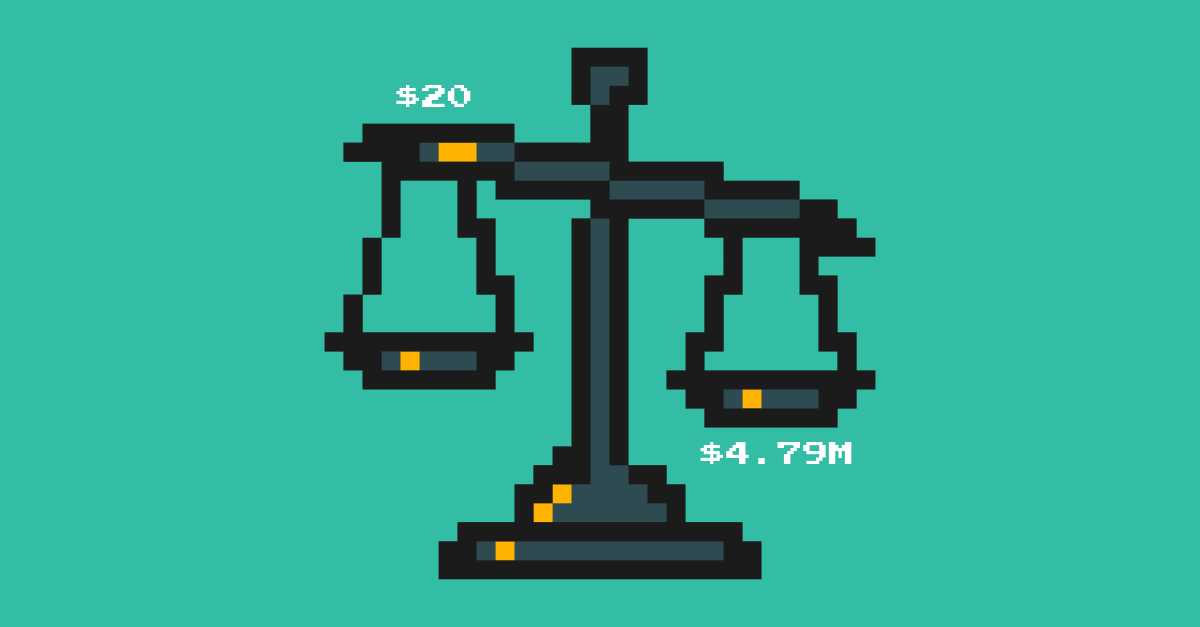
That is the attacker's side. I then priced the defender's side for 100 developers, and it came to as much as 239,500 times more expensive (this is not a typo) than the $20 spent on an attack. This post is about why those two numbers are so far apart and what to do about it.
By the Numbers
- GLM-5.3, an open-weight model anyone can download, built 50 working exploits in Anthropic's test, against 56 for Claude Mythos Preview. Claude Mythos 5.2 costs 6x to 9x more per token.
- $10K to $4.79M a year is the provider token bill to scan code for 100 developers on general-purpose models. OpenAI's Daybreak cyber model takes it to $17.65M. This is the default scenario in the Arnica AI Cost Calculator.
- Pull requests are the most visible place to scan code. They are also the cheapest scans to run and the easiest to build. The less visible work is scanning the backlog, meaning all the code already in your repositories, and getting the same findings every time you rescan it. On a frontier model, the backlog is 88% of the token bill.
The Attacker Only Needs the Outside View
I started my career as a penetration tester. Most of that work was black box: no source code, no architecture diagram, only what the application exposed to me. Most adversaries work the same way today, and the outside view is enough. Their tooling now starts from the same place. For example, one of the agentic attack frameworks that Google's Threat Intelligence Group observed in the wild, used against a US aerospace target, begins with an input as small as a target IP.
Exploitation of vulnerabilities was the initial access vector in 31% of breaches in the Verizon 2026 DBIR, ahead of every other way in. Mandiant's M-Trends 2026 puts exploits first for the sixth year in a row at 32% of intrusions, with a mean time to exploit of minus seven days. Exploitation now routinely starts before a patch exists. Defenders are moving the other way. The same DBIR found that only 26% of the critical vulnerabilities in CISA's KEV catalog were fully remediated in 2025, and the median time to resolve them rose from 32 days to 43.
The defender has no equivalent shortcut. You cannot protect an application from the outside view alone. Security checks have to run where the code is produced: at generation time, on push, in the pull request and on a schedule for the backlog. Then the running application needs a pentest, and a yearly manual one does not keep up when 100 developers ship 15,600 pull requests between two tests.
The Price Gap Is 6x to 80x on the Defender's Price List
Until this year, the strongest offensive capability sat behind access controls. Claude Mythos is still limited to verified organizations (Arnica is fortunate to have this access). Then the open-weight models got close enough to matter.
In September, NIST's Center for AI Standards and Innovation assessed Z.ai's GLM-5.3 and called it "the most cyber-capable open-weight model released to date," about four months behind the US frontier. Twelve days later, Anthropic's Frontier Red Team published its own tests, and they showed the same thing with working exploits.
That puts comparable capability at two ends of one price list. Defenders buy the frontier model at the top. Attackers download an open-weight model from the bottom.
List prices per million tokens as of November 19, 2026:
The gap is a problem because the two sides need different things from a model. An attacker needs one hit. A model that fails nine attempts in ten is good enough for that, because they retry, and 6x to 80x is their retry budget for every attempt a defender pays for at the top. A defender has to find the flaw first, across all of the code, so a miss is the breach. That is what keeps defenders at the top of the list.
Cheap closed models exist too. GPT-6 Luna and Muse Ember cost $0.10 and $0.50, and OpenAI's Daybreak cyber model sits above Mythos at $20 and $100. The difference is control. A provider can suspend an account and watch the usage. Nobody can do either to weights an attacker has already downloaded.
Volume turns the multiple into the real number. The attacker pays the low price once, on one target, when they choose. You pay the high price on every pull request and every repository, all year. That is how a $20 attack ends up facing a seven-figure defense budget, and the next section does the arithmetic.
On the SDLC Side, the Same Fight Is a Seven-Figure Line Item
I ran the default scenario in our cost calculator: 100 developers, 4 repositories per developer, 60% of them stale, 13 pull requests per developer per month. Active repositories get a full scan every week and stale ones get a single scan per year.
That workload adds up to 15,600 pull request scans and 8,560 full scans a year. On Muse Ember or GPT-6 Luna, the provider bill is about $10K. On Claude Fable 5.2 or GPT-6.2 Astra it is $4.79M, which works out to $36.44 per pull request and $493 per full scan. The code and the cadence are identical, and the bill is almost 500 times larger. OpenAI's Daybreak cyber model, the most expensive option in the calculator, takes the same workload to $17.65M.
Those figures cover provider tokens only. The estimate leaves out orchestration, storage, compute, and triage, plus the engineers who keep all of it running.
PR Review and Backlog Scanning Are Two Different Bills
Look at where the $4.79M goes in the example above. Pull requests account for $568K of it, and full repository scans account for the other $4.22M.
I see teams turn on the PR reviewer and stop there. It is the smaller bill, and it shows up where developers already work. Reviewing the diff is useful. It also leaves untouched every line merged before the reviewer was switched on, along with every repository that no longer receives pull requests, which is 60% of them in this scenario. Building the PR reviewer does not always cover your backlog, so it needs to be considered with the cost in mind.
Defenders Can Run the Same Models, With an Infra Bill
Defenders can run the open-weight models too. We see some customers running Chinese open-weight models in sandboxed environments. For certain security activities the benefit is large. In pentesting, we see results comparable to Mythos and to OpenAI's Daybreak models.
It is not as cheap as the price list suggests. A sandbox means you pay for the GPUs instead of the tokens. GLM-5.3 needs a node of eight H200 GPUs to load its weights. That node rents for $63.30 an hour on AWS on demand, which is about $554K a year whether it is busy or idle. None of this is a reason to avoid it. Just count the infra before you compare price lists.
What Enterprises Can Do About It
Spending parity is not available, and I would not try to win by putting the most expensive model on every scan. Efficiency is the lever you have. It comes from where and when the checks run.
1. Put Security Inside the Agentic SDLC
The cheapest vulnerability is the one the coding agent never writes. Give every agent your security rules at generation time so that code is secure by default. In Arnica's benchmark across six models, rules cut wrong security decisions in new code from 47% to 17%. That figure includes deliberately vulnerable open-source apps. On the production-style apps alone, the drop was from 35% to 2%.
Any miss rate still needs a second control. Whatever the rules miss has to be detected and remediated before the pull request exists, while the agent still holds the context and the fix costs a few more tokens. The AppSec team then stays out of the PR, and releases move faster because nobody is waiting on a security review.
The rules themselves need maintenance. Every harness or model change needs a benchmark run to prove that the rules still work. Additionally, drifts in these files can produce unexpected outcomes, so that should be checked as well.
2. Give the Software Factory an Independent Governance Layer
Some of you are building a software factory, a cutting edge approach with a fleet of agents that takes a ticket all the way to a deployment. Adding a security agent to the fleet is a reasonable start. It does not close the gaps I see teams run into:
- Risk management tracking: Someone has to own the record of what was found, accepted, fixed or deferred, in a form an auditor will accept.
- Workflows with decisions: The reason a finding was dismissed is lack of developer feedback loop context, which needs to be considered in the next runs to avoid mistaken decisions and behaviors by the agents.
- Independence: The fleet that writes the code should not be the only thing attesting that the code is compliant. The agents are a target too. Google's threat team documented an intruder editing a coding agent's settings file inside internal repositories, so that launching the agent pulled down a backdoor.
In Arnica's customer base, 75% of enterprises already use three or more AI coding tools. Governance tied to one agent vendor leaves the other tools uncovered.
3. Pentest Every Deployment, Incrementally
Keep the full pentest, manual or agentic, on the schedule that fits the business. PCI DSS still sets the floor at once every 12 months and after any significant change. Attackers do not work on that calendar. In one case Google documented from August, working exploits existed within a day of disclosure, and a campaign hit hundreds of organizations four days later.
Add an incremental agentic pentest on every PR creation or merge that leads to a deployment, scoped to what changed so that each run stays small. If your lower environments don't match production, run the incremental test against production on every code deployment.
This is the one control that sees the application the way the attacker does. It should run at least as often as they do.
The Scale Problems Nobody Budgets For
Each of these steps is quick to stand up for a few product teams. A midsize or enterprise company can have dozens or even hundreds of different SDLC processes, and the security team needs to integrate with all of them. In addition to the process scale, the technical scale has its own challenges:
- Model selection per project: Each scan needs a decision on how thorough or how fast it has to be, and that decision should follow the business priority of the project. Without that decision, one model runs on every repository, and you either miss too much or overspend.
- Rate limits: Model providers and source control platforms both throttle, and much of that throttling is undocumented and unclear. Your agents do not know the logic behind it, and new behaviors appear at scale. It is the last thing anyone maintaining this kind of system wants to discover in production.
- Benchmarks: The benchmark runs from step 1 become a standing job at scale. Even if you decide to keep a certain model version hosted by a foundation model company, it will be discontinued at a fairly fast pace.
- Continuous improvement: The developer feedback loop from step 2 has to work across every team, and that takes someone who owns it.
You can build this, and plenty of strong engineering teams will. Just be prepared for it, and budget for the operations as well as the tokens.
How Arnica Fits
Arnica injects security rules into coding agents at generation time. That is the prevention approach. It scans with a hybrid static analysis that reuses prior results on unchanged code, which makes AI scans up to 70x cheaper and more consistent. It also runs agentic pentests where developers make changes. Scan and pentest findings share one finding lifecycle, so the decisions made on them stay in one place. The rest of the remediation is driven by contextual workflows that align with each SDLC in the company.
Final Thoughts
The gap between attacker and defender spend will not close on price. Open-weight models trail the frontier by months and cost a fraction of it. The defender's answer is to stop paying frontier prices for work that never needed them. Prevent at generation, catch what is left before the PR, test every deployment the way an attacker would, and keep a record of every decision.
Run your own numbers in the Arnica AI Cost Calculator first. The bill is the easiest part of this problem to measure.
Frequently Asked Questions
How much does AI code scanning cost?
For 100 developers, the provider token bill runs from about $10K to $4.79M a year on general-purpose models, and up to $17.65M on OpenAI's Daybreak cyber model, based on the default scenario in the Arnica AI Cost Calculator. That covers 15,600 pull request scans and 8,560 full repository scans. Orchestration and triage come on top.
Is AI pull request review enough to secure a codebase?
A PR reviewer alone is not enough, because it only sees code that changes. Everything merged before it was enabled stays unreviewed, and so does every stale repository. Covering that backlog takes full repository scans, which make up 88% of the bill in the same scenario.
How much cheaper are open-weight models than frontier models?
Claude Mythos 5.2 costs about 6x more than GLM-5.3 on input tokens and 9x more on output. Against GLM-5.3-Flash and DeepSeek V4.1 Flash the multiple is 53x to 80x. The gap in cost per result is smaller, because weaker models need more attempts.
How often should you run a penetration test?
Run the full pentest on the schedule your business and compliance require. PCI DSS sets a floor of once every 12 months and after significant change. Add an incremental agentic pentest on every pull request or merge that triggers a deployment.
Should you build AI security scanning in-house?
Building it is realistic for a strong engineering team. Plan for per-project model selection and for rate limits from model providers and source control. Your own benchmarks and the upkeep of rules and prompts are ongoing work, and none of it appears in a token estimate.
Prove What’s Exploitable, Then Fix It.
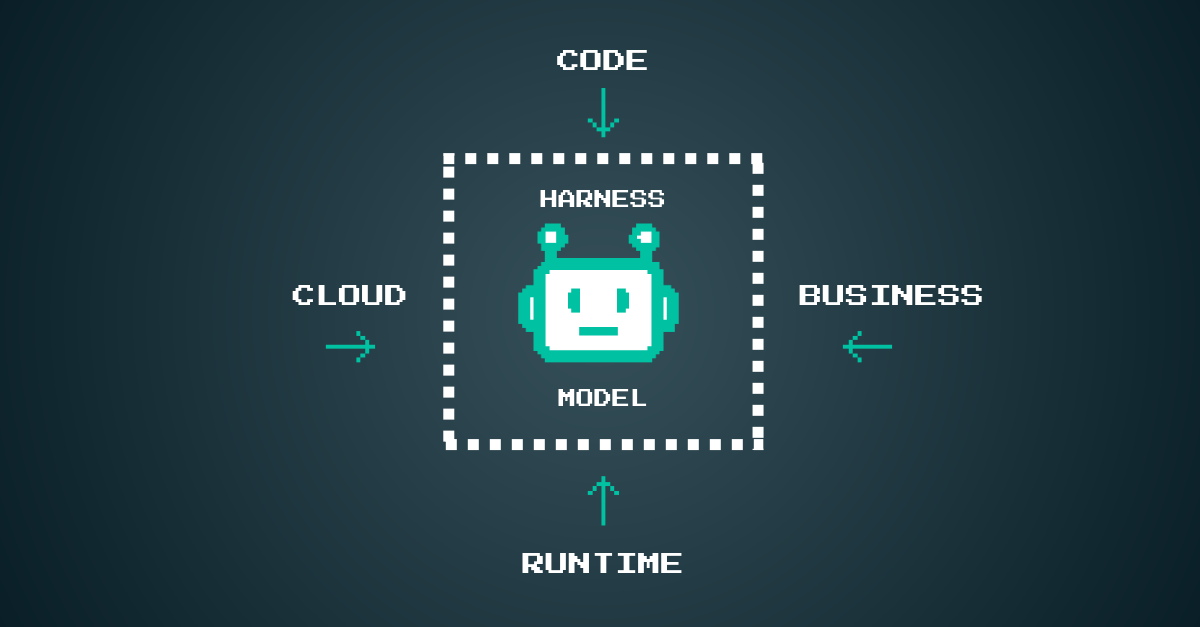
Agentic Pentesting evaluates your live application to prove which vulnerabilities can actually be exploited, using context from your code, cloud, runtime, and business.
Learn more