
Top AI-Powered SAST Tools for Reducing False Positives (July 2026)

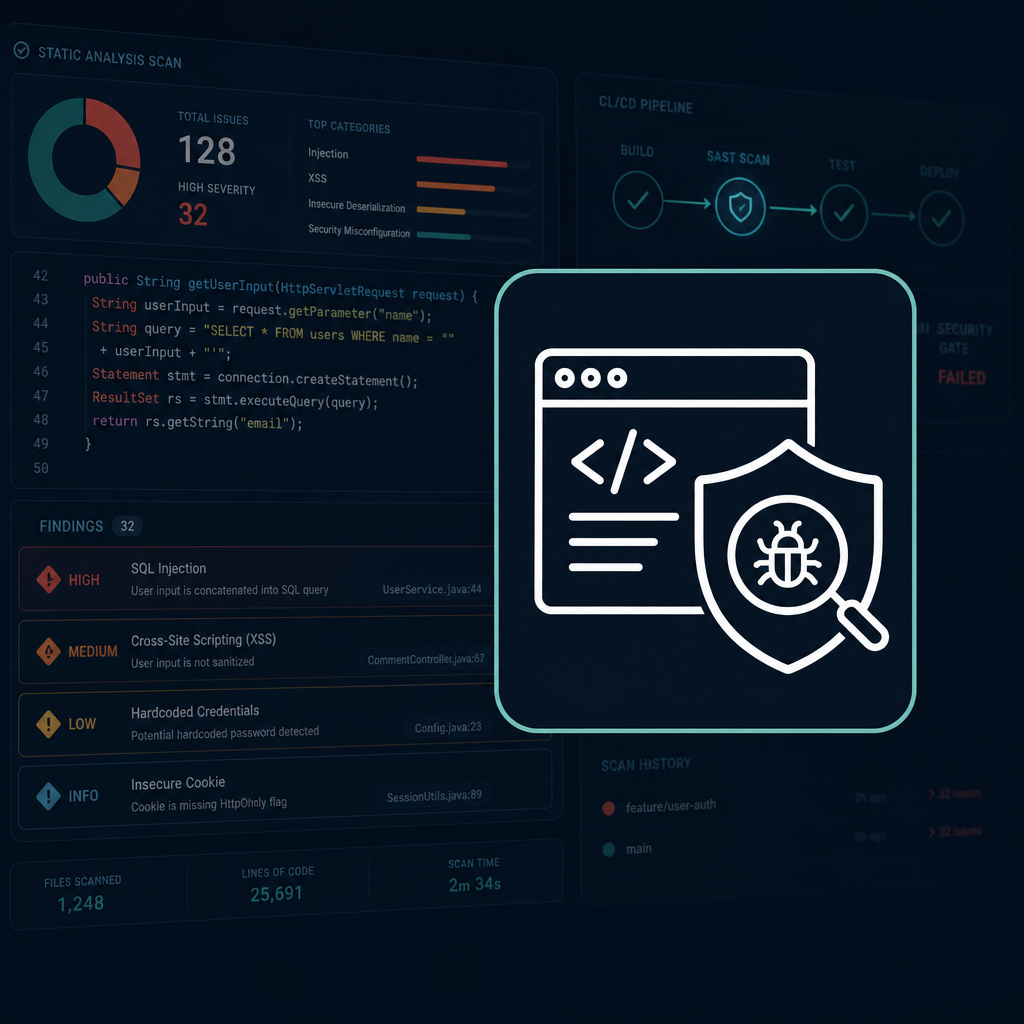
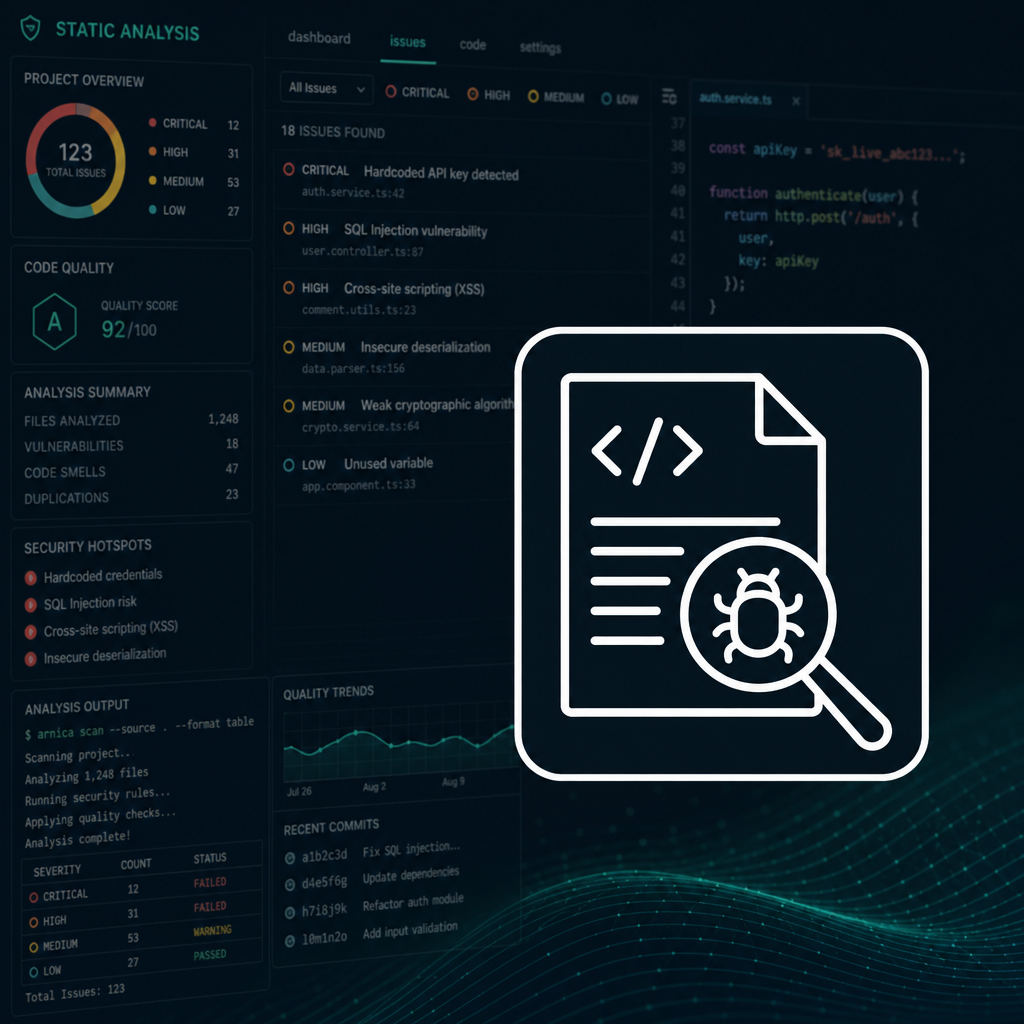
Everyone's dealt with SAST tool fatigue. You scan your codebase, get flooded with alerts, and burn a week triaging findings that turn out to be nothing. SAST false positive rates exceed 68%, which means developers tune out security entirely, and that's exactly how real risks slip through. AI-powered static application security testing flips that script by reasoning about reachability and context before flagging issues, so the vulnerabilities that hit your backlog are the ones worth fixing.
TLDR:
- AI-powered SAST cuts false positives from 50% to below 20% by tracing data flows and context instead of pattern matching alone.
- Legacy SAST flags every vulnerable pattern regardless of reachability or upstream mitigations applied.
- Pipelineless tools catch vulnerabilities before code reaches CI/CD, when fixes cost the least to implement.
- Arnica governs AI coding agents at generation and routes findings to active developers when original authors leave.
What is AI-Powered SAST?
Traditional SAST tools work by matching code against libraries of known vulnerability patterns. A function that passes user input to a database query? Flag it. Every time, regardless of whether sanitization happened three function calls upstream. Pattern-matching can't follow data flows across files, reason about business logic, or account for mitigations applied earlier in the call chain.
AI-powered SAST analyzes how code actually behaves. It traces data flows, infers context, and weighs the full application logic before raising a flag. The result is a scanner that can assess whether a vulnerable code path is actually reachable, instead of flagging every pattern that resembles one.
False positives are what happen when that reasoning is absent. Security teams spend real triage hours chasing alerts that turn out to be nothing, and when everything looks urgent, nothing gets properly reviewed. Real vulnerabilities get the same shallow attention as junk findings, which is exactly how serious risks slip through. A November 2025 study found precision jumped from 35.7% to 89.5% by adding an AI reasoning layer on top of a standalone SAST tool.
How We Ranked AI-Powered SAST Tools for False Positive Reduction
We assessed each tool across four factors that actually move the needle for AppSec teams dealing with alert fatigue.
- Accuracy of AI-driven triage: how well the tool distinguishes real vulnerabilities from noise, using contextual code analysis instead of pattern matching alone.
- Integration depth: whether the tool fits into existing CI/CD workflows without requiring major pipeline restructuring.
- Customization and tuning: the degree to which security teams can train or configure the AI layer to reflect their specific codebase and risk tolerance.
- Transparent reporting: whether findings include enough context for developers to act quickly, reducing back-and-forth between security and engineering.
False positive rates vary widely across tools. Some legacy SAST tools report false positive rates exceeding 50%, while AI-powered alternatives have brought that figure closer to 20% or below in production environments.
Best Overall AI-Powered SAST Tool: Arnica
Arnica takes a different approach to static application security testing than most tools in this space. Where traditional SAST relies on fixed rule sets that generate alerts regardless of context, Arnica's AI-powered engine weighs findings against real-world risk signals before surfacing them to your team.
The result is a dramatically lower false positive rate. Security teams spend less time triaging noise and more time remediating findings that actually matter.
What Sets Arnica Apart
A few capabilities distinguish Arnica from other AI SAST tools on the market:
- Pipelineless scanning means Arnica catches vulnerabilities before code even reaches CI/CD, giving developers feedback at the point of authorship where fixes are cheapest.
- AI-driven prioritization weighs each finding against contextual factors like reachability, data sensitivity, and exposure, so critical issues surface first without burying teams in low-signal alerts.
- Continuous repository monitoring keeps security posture current across your entire codebase beyond commit time, so risks introduced through dependency updates or configuration drift get caught quickly.
- Developer-native workflows present findings directly in the tools developers already use, reducing friction and improving fix rates without requiring security team involvement on every ticket.
Who It's Built For
Arnica fits engineering organizations that are scaling fast and can't afford security bottlenecks. AppSec teams, CTOs, and CISOs looking to reduce alert fatigue while maintaining coverage will find the AI SAST approach here meaningfully more actionable than rule-based alternatives.
Snyk

Snyk is a developer-focused application security vendor with a widely adopted SAST offering. Its static analysis scans code for vulnerabilities early in the development lifecycle, integrating directly into IDEs, CI/CD pipelines, and source control workflows.
Snyk's AI capabilities have grown substantially since 2023.
Snyk covers a broad range of languages and is generally well-regarded for its developer experience.
Corgea

Corgea is an AI-powered code remediation tool that works alongside SAST scanners to automatically generate fixes for vulnerabilities they surface. It acts as a remediation layer on top of tools like Semgrep, Snyk, and CodeQL without replacing your existing scanner.
Where Corgea focuses is on the fix, not the find. It uses AI to suggest pull request-ready code patches for flagged issues, which can cut the time developers spend resolving security findings. That said, it does not perform its own static analysis, so false positive reduction depends entirely on the upstream scanner feeding it results.
Teams considering Corgea should weigh it as a developer productivity tool within an existing SAST workflow, not a standalone AI SAST solution.
Veracode

Veracode is a well-known application security testing vendor with a long history in the SAST space. Its AI-assisted analysis builds on a large proprietary vulnerability database to cut noise in scan results, and it offers both pipeline-integrated and IDE-based scanning options.
False Positive Reduction
Veracode's triage engine applies machine learning to flag findings that match known false positive patterns, reducing the volume of alerts developers need to review. Results are ranked by confidence score, so teams can focus on high-certainty issues first.
Fit and Limitations
Veracode works best in mature AppSec programs with dedicated triage capacity and enterprise-scale resourcing.
Feature Comparison Table of AI-Powered SAST Tools
The table below maps each tool across the capabilities that matter most for false positive reduction and agentic governance.
Why Arnica is the Best AI-Powered SAST Tool for Reducing False Positives
Most AI SAST tools reduce false positives after code exists. Arnica prevents many from being written at all by governing AI coding agents at generation, before code reaches review. Coverage extends to 100% of connected repositories through SCM integration, with no pipeline restructuring required.
When agents write code under bot identities, identity-aware routing traces each commit back to the prompting human. If that author has left, findings route to an active security champion in the relevant codebase instead of a stale inbox.
Adaptive Backlog Management re-engages developers when KEV additions or EPSS score changes alter a finding's risk profile months after the original scan. The security-approved learning loop keeps developer feedback in the tuning cycle without letting dismissals quietly teach the model to ignore real risk categories. Security teams stay in control of what the model learns. That separation matters more than it sounds.
Final Thoughts on AI SAST and False Positive Management
Alert fatigue kills security programs faster than missing one scan. The best AI SAST tools cut noise by analyzing how code behaves instead of superficial pattern matching. Catching vulnerabilities at authorship reduces the backlog that buries your team later. Try Arnica free and see what pipelineless scanning does for your false positive rate.
FAQ
Which AI SAST tool is best for teams already using other AppSec scanners?
Corgea works as a remediation layer on top of existing SAST tools like Semgrep, Snyk, and CodeQL, generating fix suggestions without replacing your current scanner. Arnica operates as a complete system that governs code before it's written, scans at push time, and routes findings through identity-aware workflows, making it the right choice if you want to consolidate tooling instead of adding another layer.
How do I choose between AI SAST tools that focus on detection versus remediation?
Detection-focused tools like Arnica, Snyk, and Semgrep find vulnerabilities and reduce false positives through context-aware analysis, while remediation tools like Corgea generate fixes for findings surfaced by other scanners. If your primary pain point is alert fatigue and triage burden, choose a detection tool with strong AI-driven prioritization. If developers are already overwhelmed with confirmed findings, a remediation layer may help clear backlog faster.
What's the difference between pipelineless scanning and traditional CI/CD-integrated SAST?
Pipelineless scanning catches vulnerabilities at the point of authorship, before code reaches your CI/CD pipeline, giving developers immediate feedback when fixes are cheapest. Pipeline-integrated tools like Snyk, Sonar, and Semgrep run as part of your build process, which means findings surface later in the development cycle. For teams scaling fast or using AI coding agents, pipelineless architecture reduces friction and catches issues earlier.
Can AI SAST tools handle code written by AI coding agents?
Arnica governs AI coding agents at generation by writing managed security rules into agent configuration files across 100% of connected repositories, preventing vulnerabilities before code is written. Tools like Snyk require workstation-deployed plugins with per-developer authentication. If your team uses cloud-based AI agents like GitHub Copilot Agent or Cursor, choose a tool that governs through SCM integration instead of workstation deployment.
When should I choose custom rule authoring over AI-driven detection?
Teams with deep internal security expertise and specific compliance requirements benefit from tools like Semgrep that offer accessible custom rule syntax. If your organization lacks dedicated AppSec engineers or needs immediate false positive reduction without rule maintenance overhead, AI-driven tools like Arnica or Snyk provide stronger out-of-box accuracy through contextual analysis instead of pattern matching.
Reduce Risk and Accelerate Velocity
Integrate Arnica ChatOps with your development workflow to eliminate risks before they ever reach production.