


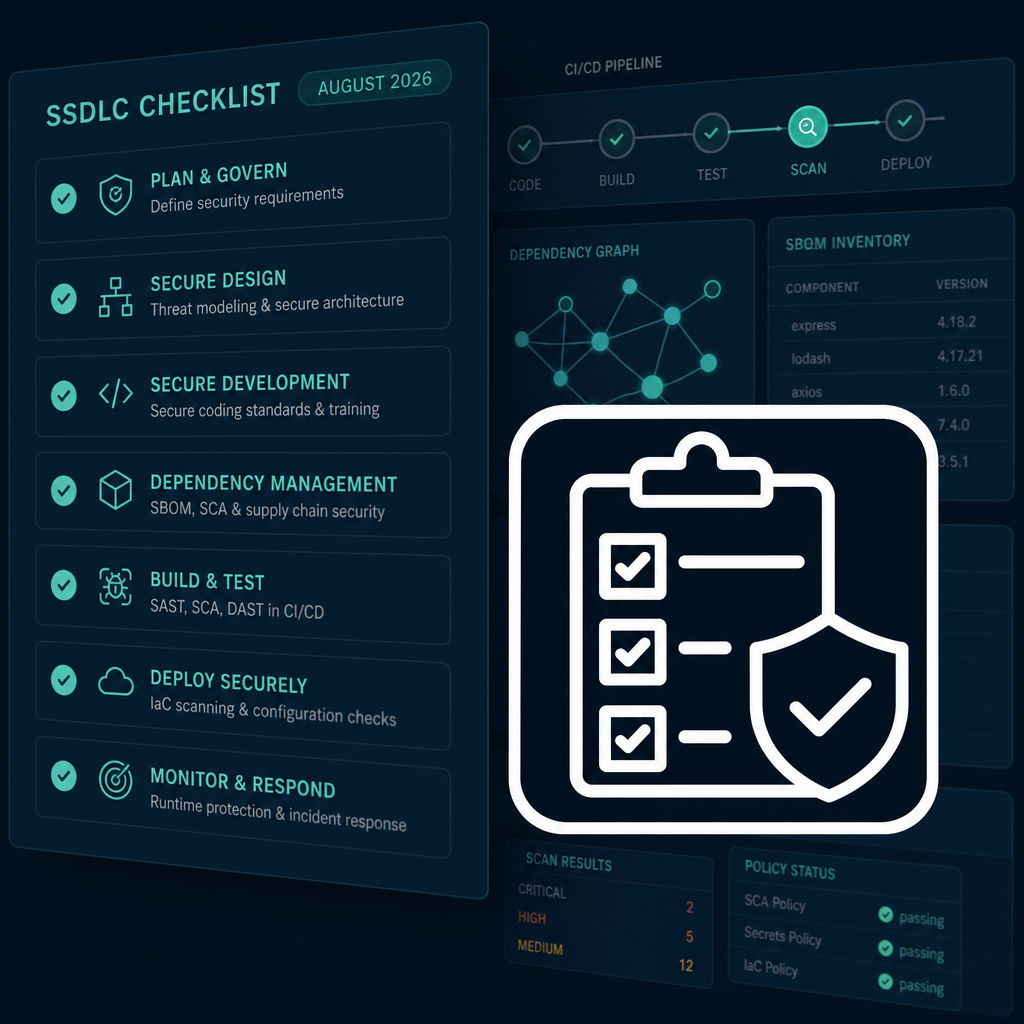

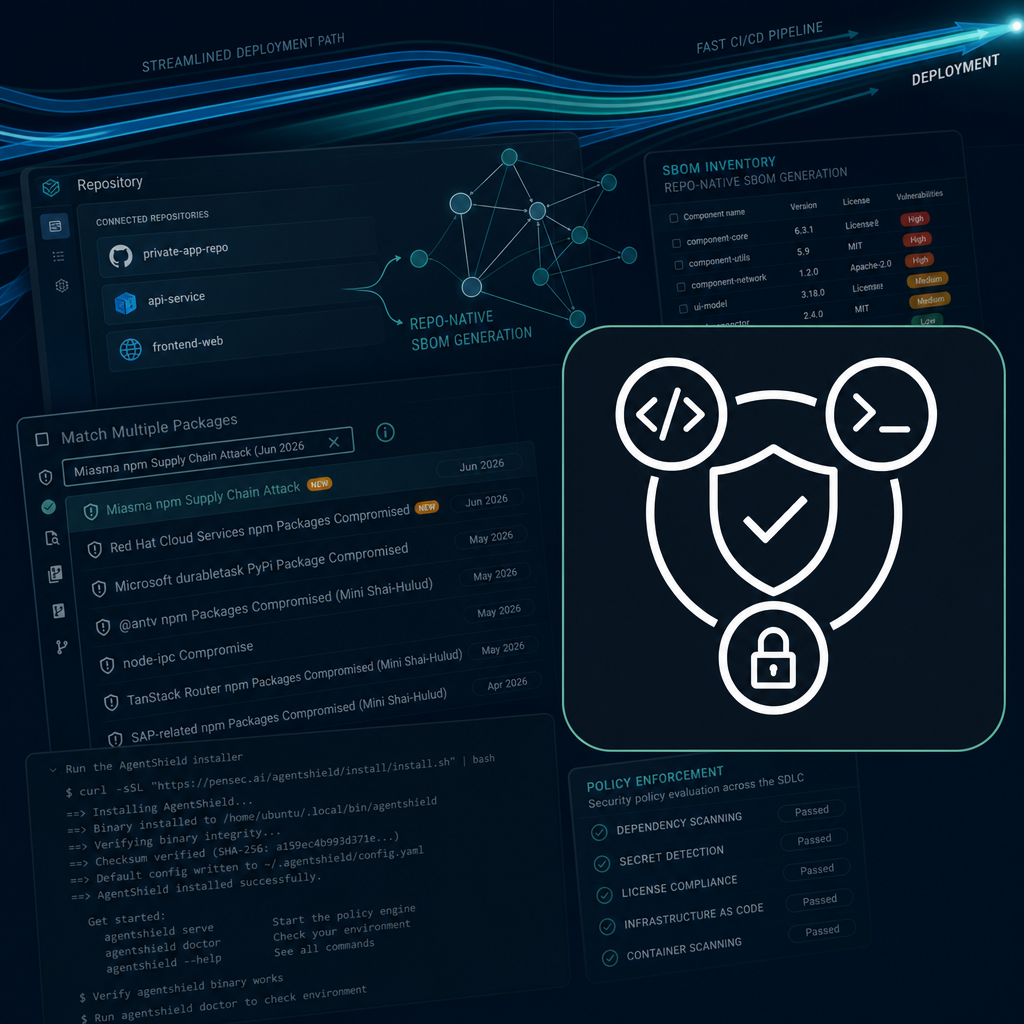
As modern development methodologies increasingly adopt agile practices, security has to keep up. Agile development emphasizes flexibility, collaboration, and quick iteration, which leaves little room for security measures that could potentially slow down the process. This is where Software Composition Analysis (SCA) plays a pivotal role in ensuring that the software supply chain is secure without sacrificing development velocity.
In this blog, we will explore best practices for implementing SCA in agile environments, particularly focusing on how to achieve seamless integration into development workflows, prioritize and triage vulnerabilities by leveraging a pipelineless approach to maintain the agility and speed your teams need without compromising on security.
1. Integrate SCA Early in the Development Lifecycle
Security often becomes a bottleneck in fast-paced development environments when integrated too late in the software development life cycle (SDLC). To avoid this, it's critical to incorporate SCA early - at the code writing and commit stages. This proactive approach not only reduces risks before they accumulate but also ensures vulnerabilities are addressed before they “leak” into main or production branches. The earlier security vulnerabilities are discovered, the cheaper and easier they are to fix.
In traditional security models, vulnerabilities often aren’t uncovered until the testing phase or even after build or deployment, resulting in costly and time-consuming remediation efforts. By integrating SCA scanning into every code push, security becomes a natural part of the process, making it easier to detect and resolve issues early on.
Benefits of Early SCA Integration
- Immediate Feedback Loop: Developers get instant feedback on security risks as they push code, allowing them to maintain their existing context and focus on the specific feature branch. As a result, it reduces the time spent on remediation later in the software development lifecycle (SDLC).
- Reduced Tech Debt: Early integration streamlines direct feedback, helping prevent technical debt related to the accumulation of security findings, which can be a significant burden on agile teams aiming for rapid delivery.
- Security-First Culture: When security tools like Arnica are seamlessly integrated into development workflows, security becomes part of the coding culture rather than an afterthought.
Real-Time Code Scanning Benefits
Arnica offers a pipelineless approach to AppSec, allowing teams to scan code in real time and deliver immediate alerts, enabling developers to fix issues while they code. This minimizes disruptions to development velocity and ensures that teams remain productive while addressing critical security risks.
2. Choose the Right SCA Tools For Your Development Environment
Selecting the right SCA tool is crucial for ensuring it enhances, rather than disrupts, your development workflow. The tool you choose should integrate seamlessly with the platforms and tools your developers already use, including source code management (SCM) platforms like GitHub, Bitbucket, GitLab, and Azure DevOps. It should also fit smoothly into collaboration tools such as Slack and Microsoft Teams, and connect to ticketing systems like Jira, ADO Boards, or ServiceNow.
Key Considerations for Choosing an SCA Tool
- Scalability: Your tool should scale with your codebases and organization, without requiring additional effort. As you grow, your SCA tool should continue to deliver timely, actionable insights without becoming a bottleneck.
- Prioritization: The tool should provide intelligent prioritization of vulnerabilities based on both generic and organizationally unique factors such as exploitability, and reachability. This helps developers focus on fixing the most critical issues first, ensuring that security efforts are effective and aligned with real-world risks.
- Automation: Effective automation reduces manual effort, allowing developers to focus on writing code while your SCA tool automatically scans for vulnerabilities. An effective SCA tool should also offer multiple remediation paths such as version upgrades or rebuilding the entire dependency tree, as well as the impact and effort associated with each action. This provides developers with flexibility in how they address vulnerabilities and empowers them to make informed decisions and choose the best remediation strategy for their specific context.
- Collaboration: Integration with collaboration tools such as Slack and Teams is essential for an agile workflow.
Arnica excels by providing real-time scanning capabilities, and seamlessly weaving security checks and feedback into the developer’s everyday workflow. This is built using a pipelineless approach that guarantees 100% coverage and visibility, always. With direct integrations into your source code management system as well as your chat and ticketing tools, developers are empowered to move quickly without leaving their environment or learning a new tool. This keeps productivity high while ensuring the codebase remains secure, and developers are happy.
3. Prioritize and Triage SCA Findings
Not all SCA findings are critical, so it’s crucial to prioritize and triage effectively. Traditional SCA scanners often rely on methods like CVSS scores and dependency management to rank vulnerabilities, but these can often be misleading because they don't provide meaningful context about the actual risk. CVSS scores are theoretical, and fail to account for factors such as exploitability, reachability, or how a vulnerability affects your specific environment. Additionally, knowing whether a certain dependency is direct or indirect (transitive) is not enough to make informed decisions. Modern SCA tools go beyond this outdated approach, offering real-time risk assessment based on factors that truly matter, allowing developers to focus on the most dangerous vulnerabilities first and avoid wasting time on less critical issues.
Package Reachability
Reachability assesses whether a vulnerability can actually be exploited in your specific environment. Not all discovered vulnerabilities pose an immediate threat, as many may not be reachable in your code. Prioritizing based on reachability helps teams focus on the vulnerabilities that pose the greatest risk, ensuring efforts are spent on those that are exploitable. That said, it’s important to identify which reachable vulnerable packages are fixable – not doing this can result in a ton of noise for developers.
Exploit Prediction Scoring System (EPSS)
EPSS is a data-driven model that predicts the likelihood of a vulnerability being exploited in the real world. By incorporating EPSS scores into your triage process, you can prioritize vulnerabilities based on their actual risk of being exploited, rather than theoretical severity alone. This approach enables organizations to focus their resources on the vulnerabilities that pose the greatest risk, ensuring a more efficient and effective risk management strategy.
Known Exploited Vulnerabilities Catalog (KEV)
The Known Exploited Vulnerabilities (KEV) catalog, maintained by the Cybersecurity and Infrastructure Security Agency (CISA), is a curated list of vulnerabilities that are actively being exploited in the wild. These vulnerabilities are particularly dangerous because attackers are already leveraging them to breach systems. Prioritizing remediation based on the KEV ensures that your team focuses on addressing the vulnerabilities that are known to pose immediate, real-world threats. By integrating KEV data into your risk management process, you can further refine your triage efforts, ensuring that vulnerabilities with active exploits are dealt with before they can be used to compromise your application.
Vulnerable Package Depth
Many vulnerabilities exist deep within a package's dependency tree, making them easy to overlook. Prioritizing based on package depth ensures that hidden vulnerabilities, which could be leveraged by attackers, are properly addressed. Ignoring deep package risks can leave your application vulnerable to exploits targeting these nested dependencies. Arnica provides deep visibility into direct, and indirect (transitive) vulnerabilities for a given package, which includes the specific CVEs, EPSS, CVSS, and KEV scores.
Comprehensive Dependency Analysis
Arnica conducts a thorough analysis of the entire dependency tree, even for packages that aren’t explicitly declared. This approach allows Arnica to present the user with all of the possible paths moving forward, including performing patch, minor, and major version upgrades, recreating the lock file, or if no fix is actually available. Furthermore, Arnica provides visibility into any new vulnerabilities that might be introduced with each proposed version. This proactive approach keeps teams one step ahead, allowing them to make informed decisions about managing vulnerabilities before they can impact the application.
By leveraging reachability, EPSS, KEV, package depth, and comprehensive dependency analysis, organizations can prioritize SCA risks with greater precision. These factors provide deep context about the potential impact of SCA risks, allowing teams to focus their remediation efforts on the most critical threats first. This targeted approach ensures that security risks are managed effectively, reducing the chances of vulnerable code leaking into main or production environments.
4. Implementing Pipelineless SCA
A common challenge with traditional SCA solutions is that they rely heavily on IDE plugins, CI/CD pipeline integrations, and status checks, leading to a lack of visibility into code repositories and causing delays in the ability to receive feedback, as code is typically scanned during pull requests, build, and deploy processes. This slows down the development lifecycle and significantly impacts development velocity.
Arnica’s pipelineless approach ensures that vulnerabilities are detected as soon as code is pushed, before it even reaches the pull request stage. This allows developers to be alerted early and address issues without waiting for pipeline execution, maintaining speed and efficiency throughout the development process.
Advantages of a Pipelineless Approach
- Blameless Communication via ChatOps: Arnica integrates with ChatOps tools like Slack and Microsoft Teams to notify developers privately, ensuring a blameless and shameless communication approach. This enables developers to leverage their existing messaging tools to receive the right fix at the right time, in a non-disruptive way, focusing on remediation without the burden of blame or pressure, or without having to use any additional tools on top of what they’re already using.
- 100% Code Coverage: Arnica scans 100% of the code across all repositories, branches, and SCMs, ensuring no blind spots. This comprehensive coverage guarantees that vulnerabilities are detected everywhere, across all phases of development.
- Development Velocity: By eliminating the need for SCA within the CI/CD pipeline, Arnica facilitates continuous scanning without adding friction to the build process. This approach speeds up development cycles and allows developers to focus on building features rather than waiting for pipeline scans.
- Real-Time Vulnerability Detection: Continuous scanning provides developers with real-time insights into vulnerabilities as they push code, enabling them to act quickly and efficiently without having to wait for traditional pipeline processes.
- Shift-Left Remediation: Arnica focuses on shifting remediation earlier in the development process, not just detection. This aligns with agile practices, reducing the number of critical bugs that are discovered too late in the cycle, and ensuring that vulnerabilities are addressed while developers are still working on the relevant feature branches.
- Automation: Arnica’s flexible and robust policy engine allows security teams to configure highly granular, custom policies that dictate how code risks are handled across various scenarios. By automating mitigation actions and ticket management, the policy engine offloads much of the manual effort from security and development teams. Whether it’s setting specific rules for repositories, risk levels, or thresholds, this automation streamlines security efforts, ensuring that code risks are managed according to organizational priorities while maintaining full control over the remediation process.
5. Employ Advanced SCA Techniques
While basic SCA techniques address many security risks, advanced techniques provide additional protection and ensure that your SCA strategy remains effective as your applications grow in complexity.
Contextual Analysis for Accurate Results
Contextual analysis in SCA delivers more precise insights by evaluating factors like reachability and exploitability of detected risks within your code. Not all code risks are immediately exploitable, but combining reachability analysis with metrics like EPSS (Exploit Prediction Scoring System) and KEV (Known Exploited Vulnerabilities) allows teams to focus on risks that are both reachable and likely to be exploited. Arnica’s approach ensures that only the most relevant, actionable risks are prioritized, enabling security teams to tackle genuine threats more effectively.
Leveraging Developer Focused Recommendations in SCA
Arnica enhances the developer experience by offering flexible remediation paths, allowing developers to choose from patching, upgrading, or rebuilding the dependency tree. Additionally, Arnica thinks one step ahead by identifying any new vulnerabilities that could be introduced with each version upgrade. This foresight is communicated privately via ChatOps, creating a developer-friendly environment that fosters informed decision-making with minimal disruption to the development process.
Integrating SCA with Workflow Tools
Arnica’s integration with ChatOps tools like Slack and Microsoft Teams streamlines the communication of security findings in a blameless, shameless way. By delivering targeted, private notifications, Arnica ensures that the right fix reaches the right person at the right time. Additionally, Arnica directly integrates with ticketing platforms such as Jira and Azure DevOps Boards, enabling automated ticket management and reducing manual tasks. This allows security and development teams to stay aligned on priorities and quickly address issues without interrupting the development flow. This seamless integration fosters a collaborative approach to security, empowering developers to take action without friction or delays.
6. Language-Specific SCA Guidelines
Different programming languages come with different security concerns. Understanding the nuances of SCA for each language your team uses is critical for maintaining security across your codebase. Below are SCA best practices for some popular programming languages.
SCA Best Practices for Java
- Use pom.xml or Gradle to manage and update dependencies directly. This ensures that only vetted packages are used in your code.
- Avoid running Gradle in untrusted environments, as this can introduce malicious dependencies.
SCA Best Practices for C/C++
- Use Conan to lock your dependency tree, preventing unexpected updates to libraries that might introduce vulnerabilities.
- Use static linking Cautiously, as static linking can embed vulnerable code directly into your application. To reduce risks, carefully vet and update linked libraries regularly, or use dynamic linking when possible to avoid embedding outdated code.
SCA Best Practices for Python
- Use Poetry instead of requirements.txt to lock dependencies, ensuring that the versions of your dependencies are secure and stable.
- Always pin your dependencies to specific versions using tools like pip or poetry. This ensures consistency across environments and prevents unexpected updates that could introduce vulnerabilities. Regularly audit and update pinned dependencies to stay secure
SCA Best Practices for JavaScript
- Always download packages from trusted sources like npm.
- Scan for unmanaged packages, such as .js files that may be directly embedded in the project directory, which can easily bypass package managers’ security checks.
Following SCA Best Practices for Seamless Threat Detection
Integrating SCA scanning early in the development lifecycle ensures continuous, seamless risk detection and mitigation. By triggering scans on every code push, organizations can identify vulnerabilities in real-time, allowing for proactive risk management. This approach minimizes the risk of code security issues accumulating into a backlog or slipping into production unnoticed, while also reducing friction between AppSec and development teams. By shifting remediation left, it ensures that development velocity is maintained without compromising security.
Book time with the Arnica team to learn more about how a pipelinless approach to Software Composition Analysis can help you upgrade your approach to AppSec.
Reduce Risk and Accelerate Velocity
Integrate Arnica ChatOps with your development workflow to eliminate risks before they ever reach production.