
Complete AppSec Solutions Guide for Security Leaders (August 2026)
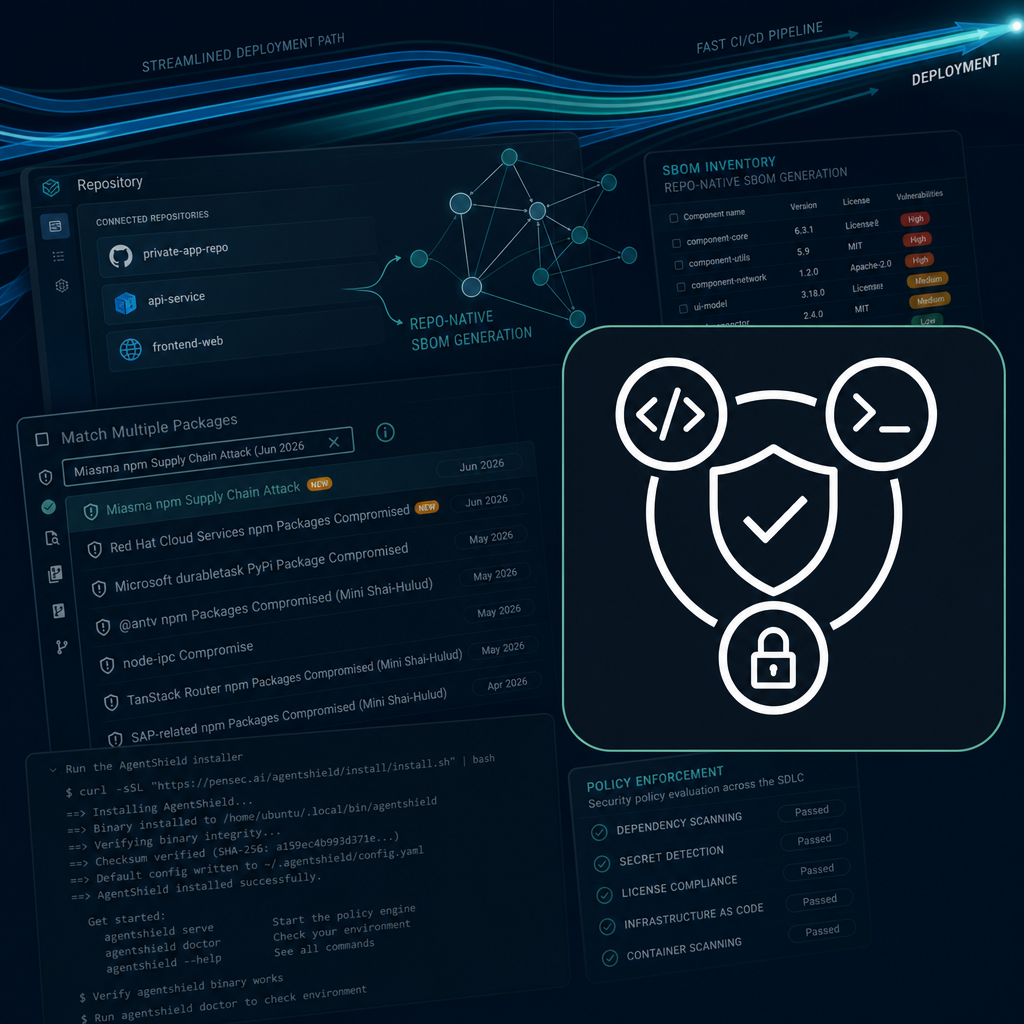


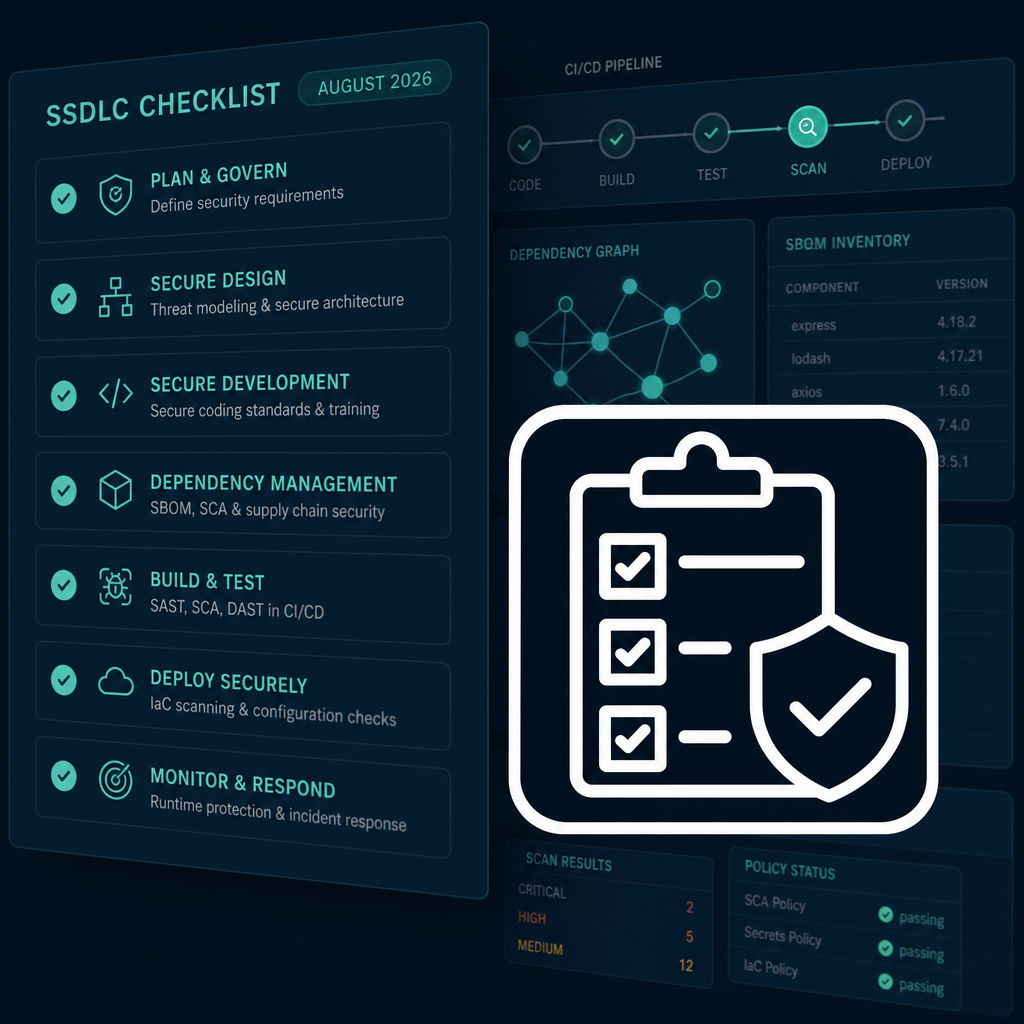
Your developers are shipping faster than ever, and a chunk of that code is AI-generated. That changes what your AppSec program needs to catch, and how early it needs to catch it. Here's a clear look at the methods, tools, and trade-offs security leaders are working through right now.
TLDR:
- AppSec covers five distinct disciplines: SAST, DAST, SCA, secrets detection, and IAST. No single method covers the full attack surface.
- Treat ASPM as a baseline requirement in 2026, not a premium add-on. Without it, you're triaging raw scanner output and missing high-severity issues.
- AI-assisted repositories grew over 50% year-over-year per GitHub's 2025 Octoverse report. Tools built for handwritten code won't catch AI-generated vulnerabilities at scale.
- Assess AppSec tools on three factors: attack surface coverage, false positive rates, and developer experience. Volume of findings is not a proxy for signal quality.
- Arnica connects through your SCM and delivers 100% repository coverage from day one, with no pipeline changes required.
What AppSec Solutions Are
AppSec is the practice of finding, fixing, and preventing vulnerabilities in software across its development lifecycle. The scope spans source code, dependencies, APIs, containers, and runtime behavior: everything an attacker could reach.
Security leaders often treat AppSec as a single tool category. It isn't. It's a set of disciplines that covers static analysis, runtime testing, and SCA, secrets detection, and runtime protection, each targeting a different exposure window in the software supply chain.
Why AppSec Demand Is Accelerating in 2026
Three forces are compressing AppSec timelines in 2026: AI-accelerated development shipping code faster than security teams can review it, a regulatory environment that now treats software vulnerability disclosure as a compliance obligation, and supply chain attacks that have moved from edge cases to mainstream attack vectors.
The result is that security leaders cannot treat AppSec as a downstream quality check. Risk accumulates at the point where code is written, dependencies are resolved, and pipelines are configured.
Core Application Security Testing Methods
Each method covers a different slice of the attack surface. Relying on any single one creates blind spots.
| Method | When It Runs | What It Finds | Key Gap |
|---|---|---|---|
| SAST | Pre-commit, PR review | Source code vulnerabilities, logic flaws, insecure patterns | Misses runtime behavior and external dependencies |
| DAST | Staging or production | Injection flaws, auth failures, exposed endpoints | No source code visibility; finds issues late in the cycle |
| IAST | Test and staging runtime | Real data-flow vulnerabilities during live execution | Requires runtime instrumentation; harder to scale in CI |
| SCA | Push and PR | Vulnerable open-source packages, license violations | First-party code issues fall outside its scope |
| Secrets Detection | Push and PR | Hardcoded API keys, tokens, credentials in code | Reactive by nature; secrets may already be cloned elsewhere |
No combination is automatically sufficient. Selecting a SAST solution matters because SAST runs early but can flag noise without cross-file or runtime context. DAST finds what an attacker sees from the outside, though it has no visibility into the code that produced the problem. IAST bridges both, but only if you can maintain a live instrumented test environment, which many teams can't scale reliably. SCA has grown harder to skip as open-source dependency attacks increase. Secrets detection is fast and high-signal, though a credential found after commit has already lived in version history, often long enough to have been cloned.
Application Security Posture Management (ASPM)
Application Security Posture Management (ASPM) has moved from a niche category to a core requirement for security teams managing risk across complex software supply chains. Where older AppSec approaches treated scanning as a discrete event, ASPM treats security posture as a continuous state that needs to be measured, tracked, and acted on across every layer of the development lifecycle.
Here is what separates ASPM from traditional AppSec tooling:
- ASPM aggregates findings from SAST, DAST, SCA, and secrets scanning into a single risk view, so security leaders stop triaging the same vulnerability across four different dashboards.
- It maps findings to business context, so a critical CVE in a customer-facing payment service ranks differently than the same CVE sitting dormant in an internal prototype.
- ASPM tracks posture over time, giving teams a measurable signal of whether risk is improving or accumulating across repositories, pipelines, and teams.
Security leaders reviewing AppSec solutions in 2026 should treat Application Security Posture Management capability as a baseline requirement, not a premium feature. Teams without it are making prioritization decisions on raw scanner output, which consistently produces alert fatigue and missed high-severity issues.
Building AppSec into the Software Development Lifecycle
Security testing that runs only at release time is a liability, not a safeguard. By the time a vulnerability surfaces in a final build review, it may have propagated across dozens of dependent services, accumulated technical debt, and cost far more to fix than if it had been caught at the commit stage.
The principle is straightforward: move security left. The execution is harder.
Where AppSec Controls Belong in the SDLC
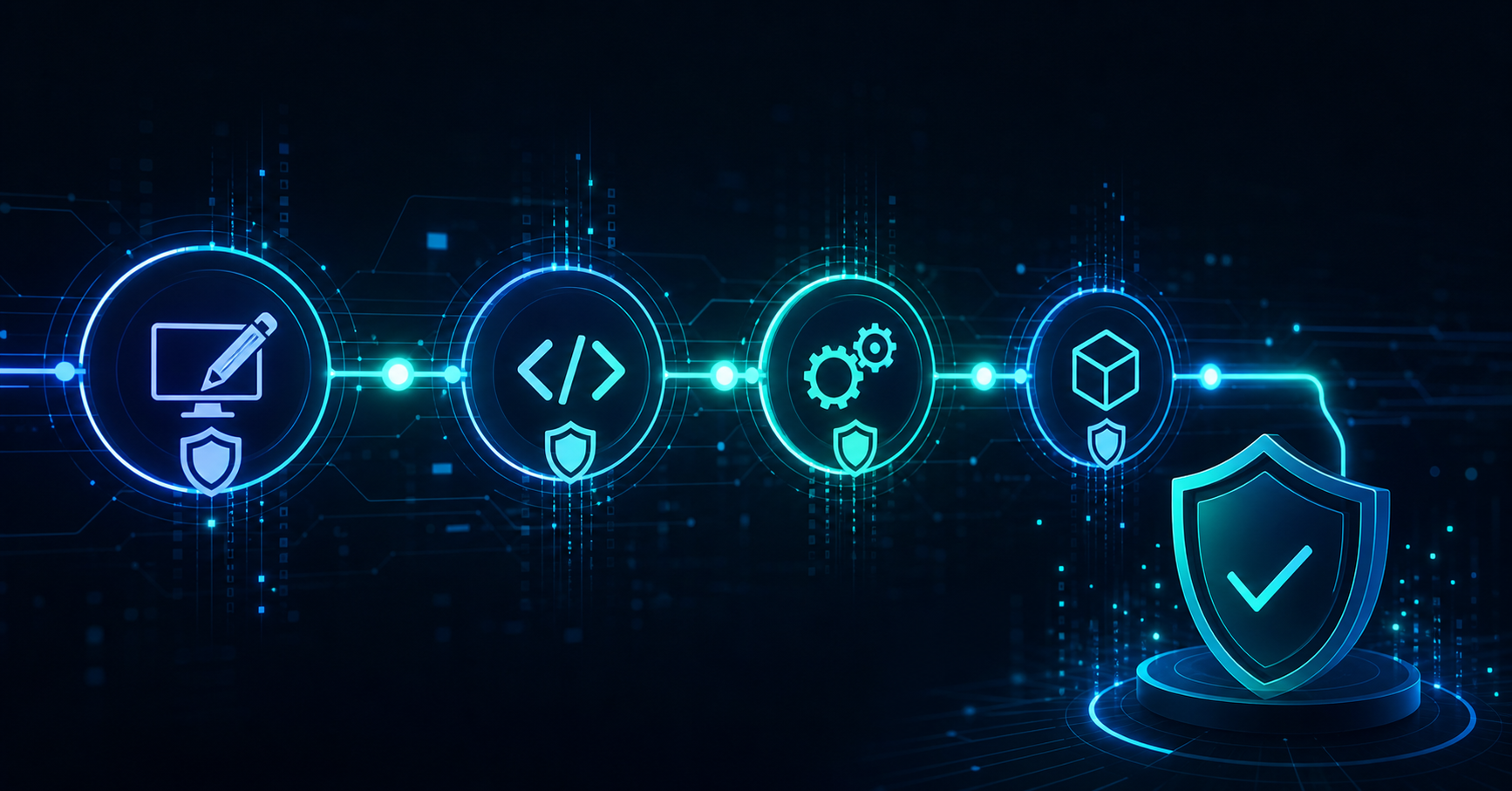
- In the design phase, threat modeling identifies attack surfaces before a single line of code is written, so architectural decisions don't create structural weaknesses that no amount of scanning can later eliminate.
- At the commit stage, SAST tools scan code as developers write it, surfacing issues inside the IDE or pull request workflow instead of in a downstream report nobody reads until a deadline hits.
- In CI/CD pipelines, DAST and SCA checks run automatically against every build, so newly introduced dependencies or exposed endpoints don't reach staging unexamined.
- At the deployment boundary, infrastructure-as-code scanning and secrets detection catch misconfigurations and hardcoded credentials before they go live.
Getting coverage at each stage matters less than getting the right signal at the right time. Building a developer-native AppSec program means a finding that blocks a developer mid-sprint with a false positive does more damage than a delayed scan, because it trains teams to suppress alerts instead of acting on them.
AppSec in the Age of AI-Generated Code
AI-generated code is arriving faster than security teams can review it. GitHub's 2025 Octoverse report found that AI-assisted repositories grew by over 50% year-over-year, and analysts estimate that AI will write the majority of net-new code by 2027.
The problem is that AI code generators inherit the vulnerabilities baked into their training data. They reproduce insecure patterns confidently, without warning. A developer accepts a Copilot suggestion that introduces a hardcoded credential or an injection flaw, the code passes a quick review, and it ships. The Cloud Security Alliance's July 2025 research found that 62% of AI-generated code solutions contain design flaws or known security vulnerabilities. AI-powered SAST tools are built to reduce false positives in this environment.
AppSec solutions built for handwritten code were not designed to catch this at scale.
How to Select AppSec Solutions
Three factors separate tools that hold up at scale from those that create new blind spots.
- Coverage of your actual attack surface: application security testing tools like SAST, DAST, SCA, secrets detection, and IaC scanning are table stakes. If a tool covers only one or two of these, you are buying point solutions and accepting the integration debt that comes with them.
- Signal quality over scan volume: A tool that surfaces 10,000 findings per sprint is not helping your team. Review false positive rates and how findings are ranked before committing.
- Developer experience: Security that slows engineering to a crawl gets bypassed. The minimum bar is IDE integration, inline feedback, and fix guidance that does not require a separate ticket to interpret.
Checkmarx One: What Security Leaders Should Know
Checkmarx One is an enterprise AppSec suite that consolidates SAST, SCA, DAST, IaC scanning, container security, API security, and ASPM under a single interface. Security leaders assessing it should weigh both its breadth and its known friction points before committing.
What It Covers
- SAST, SCA, DAST, IaC scanning, container security, API security, and ASPM are all accessible through a single tenant
- Checkmarx One supports a wide range of languages, with coverage details documented in the Checkmarx One supported languages reference
- AI-assisted remediation is available through Checkmarx One AI, surfacing fix suggestions alongside scan findings
Where Teams Run Into Trouble
- Pricing is not published publicly, and community discussions on Reddit suggest wide variation based on seat count and module selection
- Onboarding and tuning can require dedicated AppSec resources, which creates a barrier for smaller teams without in-house expertise
- The Checkmarx University login portal provides training resources, but working through them takes time that many security teams do not have at procurement
Other AppSec Solutions Security Leaders Consider
Most enterprise evaluations don't stop at Checkmarx One. Reviews of the top application security tools in 2026 show these appear frequently on security leader shortlists, each with a distinct fit and a real ceiling.
| Tool | Best Fit | Key Trade-off |
|---|---|---|
| Snyk | Developer-first SCA and SAST with strong IDE integration across major languages | Pipeline-dependent delivery; per-developer pricing scales steeply at larger headcounts |
| Semgrep / SonarQube | Teams that want to write and own their detection rules instead of relying on vendor-curated packs | Both require pipeline coverage to be effective, which leaves pre-pipeline risk undetected |
| Veracode | Enterprises with mature AppSec programs that need broad language support and compliance reporting | Scan cycles and a professional-services implementation model that may require more lead time for high-velocity engineering teams |
| GitHub Advanced Security | Orgs already deep in the GitHub ecosystem looking for native SAST and secret scanning | Coverage narrows quickly outside the GitHub environment; limited standalone DAST capability |
| Arnica | Security teams looking to reduce risk accumulation across the software supply chain without slowing developers down | Newer entrant compared to legacy vendors, though its pipelineless security architecture catches risk earlier in the development cycle |
Key Challenges in Running an Effective AppSec Program
Security teams face a compounding set of pressures that make AppSec programs difficult to run well. Vulnerabilities accumulate faster than they can be remediated, developers and security engineers operate with misaligned incentives, and tooling often generates more noise than signal.
Three structural gaps explain why most programs struggle:
- Alert fatigue is real: scanners routinely surface hundreds of findings per sprint, many of which are false positives or low-severity issues that crowd out genuinely risky code.
- Coverage is uneven: teams frequently secure some pipelines thoroughly while leaving others largely untouched, creating blind spots that attackers reliably exploit.
- Remediation ownership is unclear: when a scanner flags a vulnerability, accountability for fixing it often falls into a gap between security and engineering teams. ASPM tools that empower developers help close this gap by making ownership explicit.
How Arnica Secures the Agentic Development Lifecycle
Arnica connects through your SCM and delivers 100% repository coverage from day one, with no pipeline changes and no IDE plugins for developers to install or ignore. The agentic development lifecycle gets full visibility from the moment you connect.
Final Thoughts on Running an Effective AppSec Program
AppSec tools are only useful if your team can act on what they surface. Alert fatigue, uneven coverage, and unclear remediation ownership are what turn good tooling into wasted spend. Closing those gaps starts with knowing what you actually have. Connect your SCM to Arnica and get full repository visibility from day one.
FAQ
What appsec solutions should security leaders consider in 2026?
The right shortlist depends on your top priorities. Checkmarx One suits enterprises that need a broad, consolidated suite covering Checkmarx SAST, DAST, SCA, IaC, and ASPM under one tenant. Snyk fits developer-first teams anchored on SCA and IDE integration. Arnica fits security teams that need pipelineless coverage across every repository from day one, with no pipeline changes required and no developer tooling to install.
How does Checkmarx One pricing work, and why isn't it published?
Checkmarx One pricing is not publicly listed, and discussions on Reddit suggest wide variation based on seat count and which modules you select. You will need to engage their sales team directly to get a number, and the final cost often depends on whether you are licensing the full suite or individual capabilities like Checkmarx SAST or Checkmarx One AI.
What's the best way to handle AppSec for AI-generated code without slowing down developers?
The core problem is that scanners built for handwritten code were not designed to catch vulnerabilities in AI-generated output at the volume and speed it now arrives. The right approach combines agent-time or PR-native scanning that catches issues before code reaches the main branch, with finding routing that goes directly to the developer who can act on it, not to a backlog that nobody reads. Arnica connects through your SCM and delivers repository-wide coverage without pipeline instrumentation, so security signal reaches developers inside the workflow they already use.
How do you reduce alert fatigue in an AppSec program?
Alert fatigue comes from two places: high false positive rates and poor prioritization that surfaces low-severity findings alongside critical ones. The fix is ASPM-level correlation that maps raw scanner output to business context, so a critical CVE in a customer-facing service ranks above the same CVE sitting dormant in an internal prototype, and developers only see findings they can act on immediately.
When should a security team consider replacing Checkmarx with a more developer-native appsec solution?
The signal to look for is remediation rate, not scan coverage. If your Checkmarx SAST findings are accumulating in a backlog instead of getting fixed, the scanner is not the problem; the delivery model is. Tools that require developers to leave their workflow to act on findings consistently produce lower fix rates. Pipelineless, developer-native solutions that route findings directly into Slack, Teams, or PR comments tend to close that gap by meeting developers where the work actually happens.
Reduce Risk and Accelerate Velocity
Integrate Arnica ChatOps with your development workflow to eliminate risks before they ever reach production.