

Picking an AppSec vendor from the Gartner Magic Quadrant Leaders quadrant feels safe, and for a lot of use cases it still is. AI agents now generate code at volume, bypassing incremental commit patterns pipeline-based scanning was built around. The quadrant tells you about post-generation detection, almost nothing about what comes before it.
TLDR:
- The October 2025 Gartner AST Magic Quadrant assessed 16 vendors; Black Duck led Ability to Execute for the sixth consecutive time
- 25% of AI-generated code contains confirmed security vulnerabilities, and pipeline-based SAST misses it due to a timing gap at PR open
- The MQ has no scoring axis for agentic governance or pipelineless coverage; IDE plugin adoption averages 20% across enterprise orgs
- Gartner's September 2026 New-Market Quadrant for AI Application Security is a separate report focused on protecting AI systems, not securing code
- Arnica sits outside the AST MQ by design, recognized in Forrester's Agentic Development Security Tools Market Map, Q2 2026 for pre-commit agent governance
What the Gartner Magic Quadrant for Application Security Testing Actually Measures
Gartner defines the application security testing tools market as products that help organizations assess applications for security risk across source code, runtime tests, and supply chain components. Per Gartner's published market definition, AST products must support risk identification, prioritization and triage, policy evaluation, and remediation assistance across on-premises, SaaS, and hybrid delivery models.
The Magic Quadrant plots vendors on two axes:
- Ability to Execute measures how well a vendor delivers today: product capability, customer experience, sales execution, and market responsiveness.
- Completeness of Vision measures where the vendor is headed: market understanding, AI integration, and how well their roadmap anticipates what enterprise buyers will need next.
Leaders score well on both. Challengers can execute but lack vision. Visionaries have strong roadmaps but haven't fully proven delivery at scale. Niche Players are more specialized or earlier-stage on both dimensions.
The 2025 Gartner AST Magic Quadrant was released in October 2025. It assessed 16 vendors including Checkmarx, Snyk, Black Duck, Veracode, GitHub, GitLab, and Semgrep, with analysts Jason Gross, Mark Horvath, and Dionisio Zumerle leading the evaluation.
The 2025 Magic Quadrant: Vendors, Placements, and What Changed
The October 2025 AST Magic Quadrant scored 16 vendors across completeness of vision and ability to execute. Black Duck led Ability to Execute for the sixth consecutive time, a consistent signal of enterprise delivery strength.
| Vendor | Notable Position Signal |
|---|---|
| Black Duck | Highest Ability to Execute (6th consecutive) |
| OpenText | Named Leader; every evaluation since inception |
| Checkmarx | Named Leader; broad enterprise footprint |
| Veracode | Leader; strong in compliance-driven industries |
| Snyk | Leader; developer-first, strong SCA |
| GitHub | Leader; native SCM advantage |
| GitLab | Leader; integrated DevSecOps |
| Semgrep | Strong vision; rule-depth differentiator |
| Apiiro | Niche Player; ASPM-focused |
| Cycode | Niche Player; supply chain focus |
| Contrast Security | Niche Player; runtime instrumentation |
| JFrog | Niche Player; artifact-centric |
| Mend.io | Niche Player |
| HCLSoftware | Niche Player |
| Sonatype | Niche Player |
| Data Theorem | Niche Player |
Mapped against the broader AppSec tools market, the Leaders quadrant skews toward vendors with broad scanner coverage and mature enterprise sales motions. Several still depend on pipeline-based delivery and IDE plugins, architectures built for humans writing code incrementally, not for AI coding agents that bypass that workflow entirely.
How Gartner's AST Evaluation Criteria Have Shifted for AI
Gartner's 2025 Magic Quadrant summary stated directly that "AI, modern application designs and increased software supply chain risks are expanding the AST market scope." That signals where evaluation criteria are heading.
Capabilities that were differentiators two years ago are now table stakes:
- AI-assisted triage and fix suggestions
- Integration throughout the software development lifecycle, beyond pre-deployment gates alone
- Supply chain component inspection alongside traditional SAST
What still separates vendors in 2026 is how AppSec handles AI coding agents: scanning it after the fact versus governing it before it's written. The quadrant's evaluation model hasn't fully accounted for agentic workflows where code arrives as complete draft PRs from cloud agents, bypassing the incremental push patterns that pipeline-based scanning was built to intercept.
The New Gartner New-Market Quadrant for AI Application Security
In September 2026, Gartner published a research document distinct from the traditional AST Magic Quadrant: the New-Market Quadrant for AI Application Security. The eMQ plots vendors on two axes specific to this early-stage space: "Potential for Market Disruption" and "Potential to Execute." Two vendors landed in the Market Shaper position: F5 and Palo Alto Networks.
The scope is deliberately different from the AST MQ. Where the traditional quadrant covers scanning and testing across source code, runtime, and supply chain, the eMQ focuses on threats unique to AI systems themselves: prompt injection, sensitive data leakage from AI models, and security across autonomous agents and their underlying infrastructure. This is a protection-of-AI problem, not a code-security problem.
For enterprise security buyers, the distinction matters. A vendor in the AST Magic Quadrant Leaders quadrant is being scored on how well it secures the applications developers build. A vendor in the AI Application Security eMQ is being scored on how well it protects AI models, AI applications, and agentic systems from being attacked or exploited as runtime targets.
The Gartner Hype Cycle for Application Security, 2026
Gartner published the Hype Cycle for Application Security 2026 in July 2026, framing AI as simultaneously expanding the attack surface and powering new defenses. The report names agentic security testing and behavioral exploit detection as early-stage advances, while SAST and SCA continue their march toward mainstream maturity.
The Hype Cycle and the Magic Quadrant answer different questions. The MQ tells you which vendors can execute. The Hype Cycle tells you which capabilities are ready for production investment now versus which need more time to prove out.
For timing decisions, position in the cycle matters. A capability at Peak Inflated Expectations probably cannot handle production scale. Something in the Slope of Enlightenment is a safer near-term bet. Security leaders who layer mature capabilities first, then add newer ones as they prove out, avoid both over-investing in hype and falling behind on real changes in the threat environment.
The practical pairing: use the MQ to shortlist vendors who can execute today, and use the Hype Cycle to pressure-test whether the capabilities those vendors promote are mature enough to commit budget to. A vendor leading on agentic security testing carries more weight if Gartner places that capability in early mainstream than if it is still climbing toward the peak.
Why Static Analysis Alone No Longer Covers the AI Code Risk Surface
Multiple analyses of AI-generated code security point to a consistent pattern: a measurable share of AI-generated code carries vulnerabilities, with the same flaw types recurring regardless of which model wrote the code: injection flaws, SSRF, and hardcoded credentials.
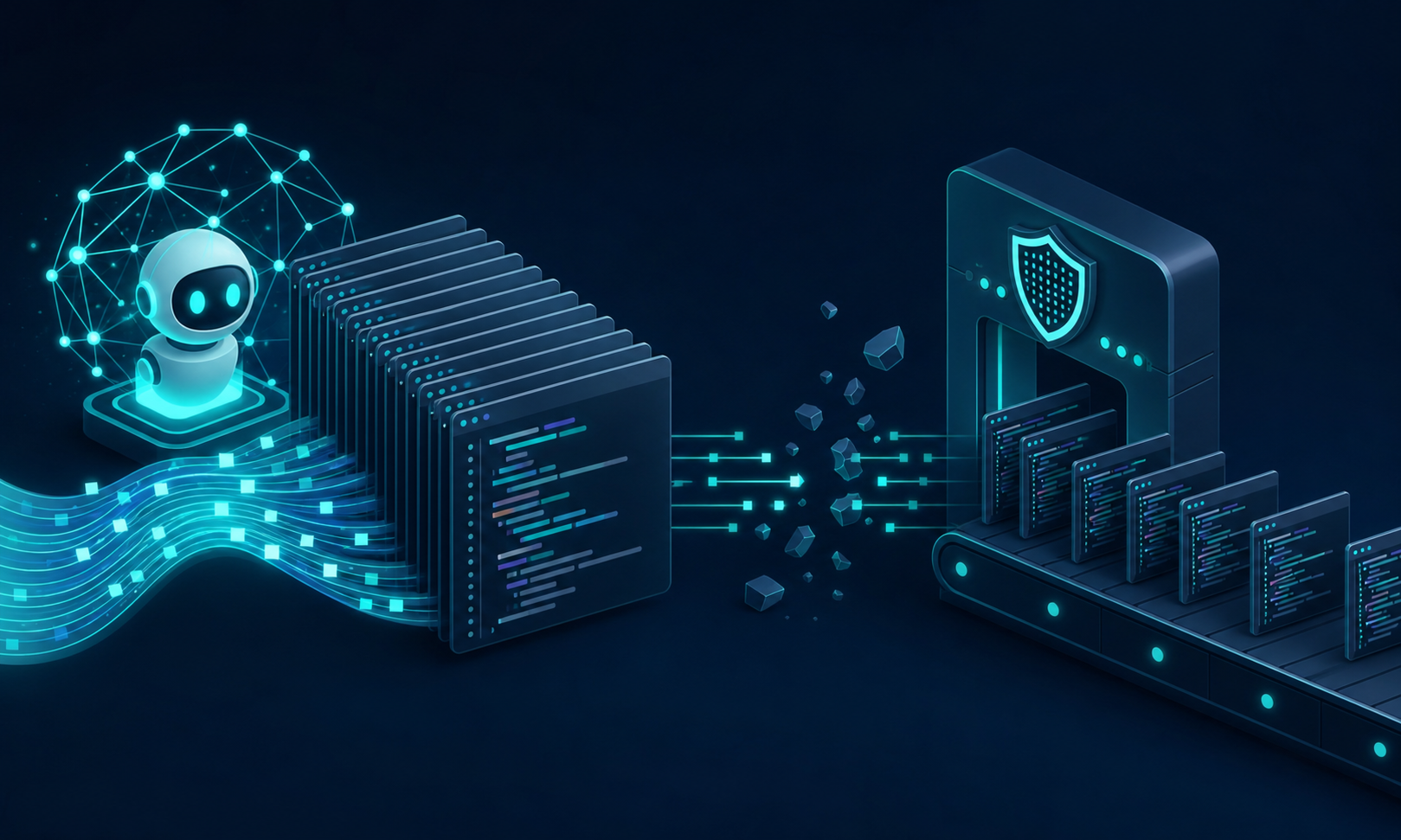
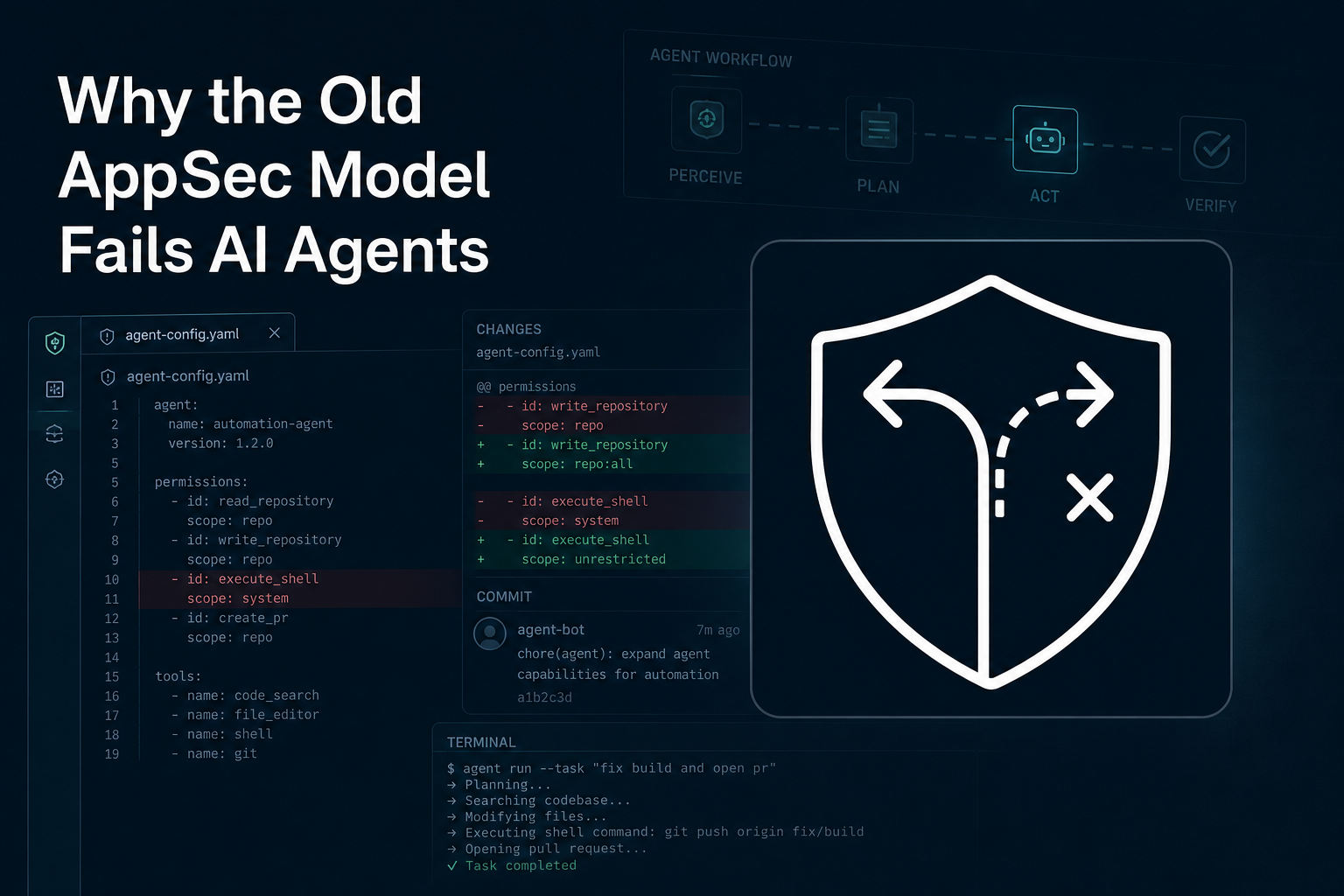
Traditional SAST was built for a specific pattern: a developer writes code incrementally, pushes commits, and the scanner intercepts the build pipeline. AI coding agents break that assumption. They deliver complete draft PRs in a single pass, often generated in a cloud environment with no workstation in the loop, bypassing the incremental push cycle that pipeline-based scanning was designed to catch.
The consequence is a timing gap. By the time a pipeline scanner sees the code, the PR is already open, the diff is large, and the reviewer is deciding whether to merge. Because AI agents generate code at volume, the backlog of flagged findings grows faster than security teams can triage them.
Rule-based scanners also hit an architectural ceiling with AI-generated code. They match patterns against fixed vulnerability signatures, but AI-generated code produces context-dependent risks: authorization gaps tied to feature flags, multi-file data flows where sanitization happens in one file and a sink lives in another, and insecure business logic that no rule pack models because it is specific to that application's architecture.
How the Magic Quadrant Leaders Approach AI-Generated Code
Most Leaders in the 2025 Magic Quadrant have added AI capabilities in roughly the same direction: AI-assisted fix suggestions, LLM-powered triage to reduce false positives, and AI-augmented rule engines that reason beyond fixed signatures.
Here is how that breaks down across the named Leaders:
- Snyk's DeepCode AI and Snyk Agent Fix generate remediation suggestions on surfaced findings, giving developers a starting point for fixing what the scanner catches.
- Black Duck and Checkmarx have layered AI-assisted triage on top of their proven rule-based engines, helping teams rank which findings to act on first.
- Veracode has invested in AI-guided remediation workflows that walk developers through the fix process once a vulnerability is identified.
These are genuine improvements over pure pattern matching. The underlying motion, though, is consistent across the Leaders group: scan after code is written, surface findings, suggest fixes. The AI layer accelerates that workflow. It does not change where in the lifecycle the vendor intervenes.
For enterprise buyers, the practical question is whether that approach holds up when AI coding agents are generating the code. When a Copilot Agent or Cursor cloud agent delivers a 200-file draft PR in a single pass, the Leaders' existing model applies AI to help triage the resulting findings. The volume is higher, the diff is larger, and the triage workload scales with agent output. AI-assisted fix suggestions help, but they operate downstream of the generation event, not before it.
What the Quadrant Doesn't Capture: Agentic Governance and Pipelineless Coverage
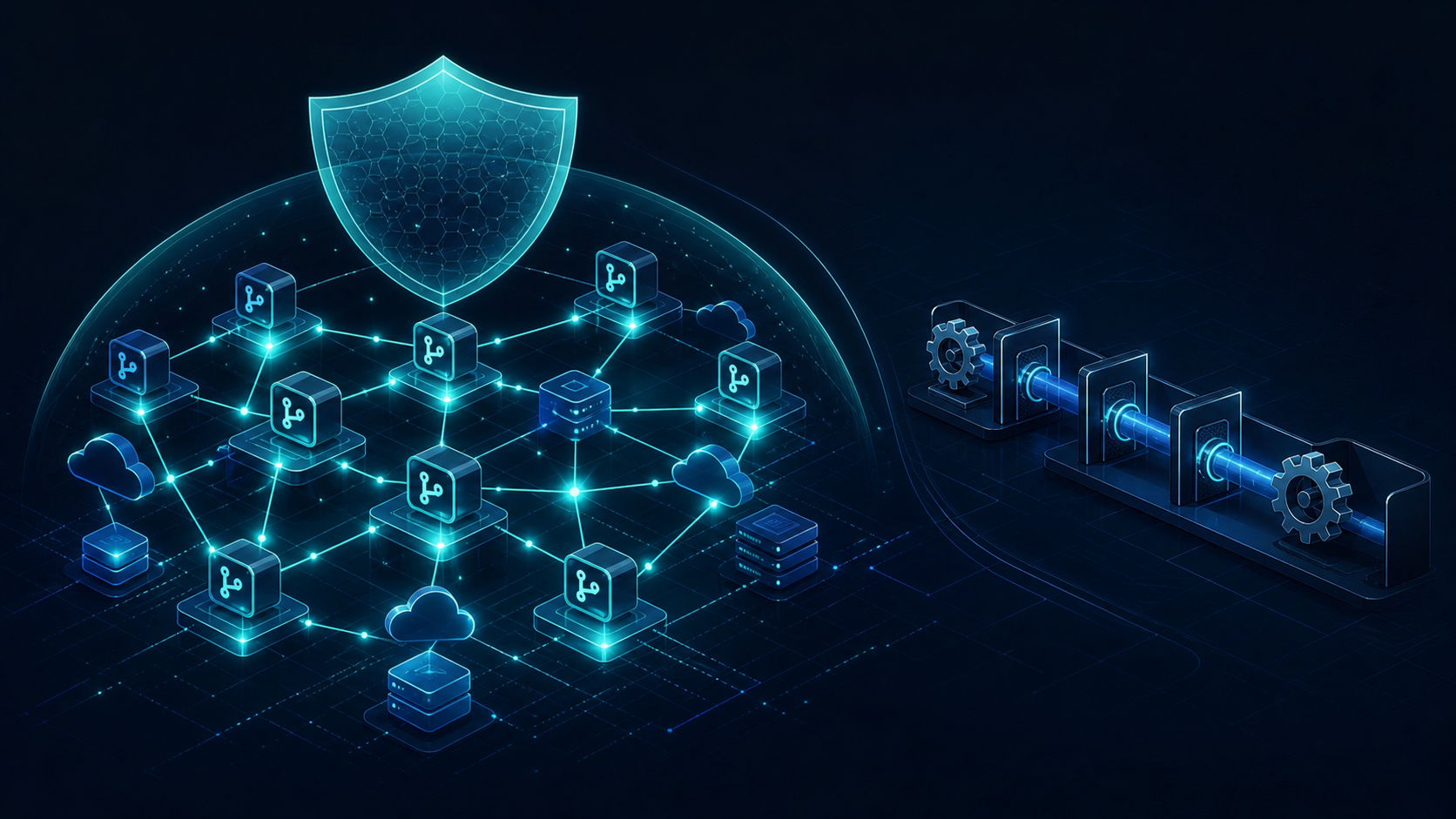
The Magic Quadrant scores vendors on how well they scan and test applications. That framing assumes a human writes code, a pipeline runs, and a scanner intercepts findings before deployment. Agentic governance sits outside that frame entirely.
Two gaps stand out.
- The first is timing. Magic Quadrant evaluation criteria reward vendors who detect vulnerabilities after code exists. Governing what an AI coding agent is allowed to write before a single line is committed is a different capability, and the current evaluation model has no scoring axis for it.
- The second is coverage. IDE plugin adoption averages around 20% across enterprise engineering orgs. Vendors whose delivery depends on per-developer installation are structurally limited to that ceiling, and the MQ doesn't penalize them for it.
Pipelineless deployment changes the math. An SCM-event architecture built on pipelineless security reaches 100% of connected repositories from day one, with no pipeline configuration and no per-developer setup. In an environment where AI coding agents run in the cloud with no IDE in the loop, that architecture is the only one that actually reaches the agent's execution context.
These gaps represent a different intervention point: governance before generation, not detection after merge. Buyers using the MQ as their primary shortlisting tool will find vendors with strong scanning execution, but the framework won't surface whether any of them can govern what the agent writes at the moment it writes it.
How Enterprise AppSec Teams Are Using Magic Quadrant Shortlists in Practice
Enterprise security teams treat the Magic Quadrant as a starting point, not a verdict. A CISO running a serious AST evaluation will take the Leaders quadrant, cross-reference placements with Gartner Peer Insights reviews from organizations in their industry and size band, and layer in Critical Capabilities reports that score vendors against specific use cases. A vendor leading on Ability to Execute might score poorly on the use case that matters most to that specific team.
Three factors consistently reshape shortlists once that layering happens.
- Regulatory environment: Teams in FinTech, healthcare, and insurance weight compliance evidence and audit trail depth heavily. A Leader without strong SCA and SBOM documentation often drops off the list when an auditor is in the room.
- Team size and maturity: A lean AppSec team of two or three people will deprioritize vendors requiring extensive pipeline configuration or ongoing rule maintenance. Coverage that works without continuous tuning is worth more than scanning depth that requires a dedicated operator.
- AI coding adoption stage: Teams where AI agents are already writing a substantial share of code are asking different questions than teams just starting to adopt Copilot. The former group wants to know whether a vendor can govern what the agent writes, not merely scan the output afterward.
The practical process most mature teams follow is roughly sequential: use the MQ to build an initial list of eight to ten vendors, use Peer Insights and Critical Capabilities to cut to four or five, then run a structured proof of concept weighted against the organization's actual environment. The POC stage is where deployment model, coverage mechanics, and developer experience surface in ways no analyst report fully captures.
Where Arnica Fits in the Post-MQ AppSec Market
Arnica sits outside the traditional AST Magic Quadrant vendor set, and that placement is intentional. The MQ scores vendors on how well they scan code after it exists. Arnica's Agentic Rules Enforcer operates before a line is committed, governing what AI coding agents are permitted to write during generation. That intervention point has no scoring axis in the current MQ evaluation model.
Arnica has been named in three 2026 analyst reports covering pre-generation governance. Gartner named Arnica in Gartner's Platform Engineering Hype Cycle, 2026 under Software Supply Chain Security. Forrester formally named Arnica in its Agentic Development Security Tools Market Map, Q2 2026, the first tier-one analyst recognition of the Agentic Development Lifecycle Governance category. The Latio 2026 Application Security Report designated Arnica "Best for Mid-Market," the only vendor among the six assessed to receive that specific label.
For enterprise teams running a Magic Quadrant shortlist alongside an evaluation of AI coding agent governance, the practical frame is additive. MQ Leaders cover post-generation detection well, alongside Arnica's recognition in the Gartner MQ for Supply Chain Security. Arnica covers the governance layer upstream of that, where pipelineless SCM-event delivery reaches 100% of connected repositories and agentic rules shape what agents write before any scanner sees the output. These are different intervention points, reinforced by Arnica's naming as a representative provider in Gartner's agentic AST report, and enterprise programs scaling AI coding adoption increasingly need both covered.
Final Thoughts on Using the Magic Quadrant to Assess Application Security Testing Vendors
Treating the MQ as a shortlist, not a verdict, is the right move. Cross it with Peer Insights, weight it against your regulatory environment and team size, and run a real POC before committing. If AI agents are already writing a meaningful share of your code, add one more question to your evaluation: can this vendor govern what the agent writes, or only scan what it produced. Create a free Arnica account to see how pre-generation governance fits into your current AppSec setup.
FAQ
What does the Gartner Magic Quadrant for Application Security Testing actually measure, and what does it miss about AI-generated code security in 2026?
The Gartner Magic Quadrant for Application Security Testing scores vendors on Ability to Execute and Completeness of Vision across scanning, triage, prioritization, and remediation -- capabilities built for code humans write incrementally through a pipeline. What it does not score is governance before code exists: the ability to shape what an AI coding agent is permitted to write before a single line is committed. Enterprise buyers assessing AppSec platforms for agentic workflows should treat the MQ as a reliable shortlist for post-generation detection, then separately determine whether any vendor can govern the agent at generation time, since that intervention point has no scoring axis in the current evaluation model.
Should a CISO use the 2025 Gartner Magic Quadrant Leaders list as the full shortlist for an enterprise AppSec evaluation in 2026, or layer in additional research?
Start with the Magic Quadrant to build an initial list of eight to ten vendors, then layer in Gartner Peer Insights reviews filtered to your industry and size band, the Gartner Critical Capabilities report scored against your specific use cases, and the Hype Cycle for Application Security 2026 to pressure-test whether the capabilities each vendor leads on are mature enough for production commitment. A vendor scoring well on Ability to Execute may score poorly on the use case that matters most to your team. Compliance-heavy industries weight SCA and SBOM depth heavily, lean AppSec teams deprioritize vendors requiring extensive pipeline configuration, and teams where AI agents are already writing a substantial share of code need to ask whether the vendor governs what the agent writes and does more than scan the output.
What is the difference between the Gartner Magic Quadrant for Application Security Testing and the Gartner New-Market Quadrant for AI Application Security published in September 2026?
The AST Magic Quadrant scores vendors on securing applications developers build: SAST, SCA, IaC, secrets detection, and supply chain inspection. The September 2026 New-Market Quadrant for AI Application Security scores vendors on protecting AI systems themselves from being attacked as runtime targets, covering prompt injection, sensitive data leakage from AI models, and security across autonomous agent infrastructure. F5 and Palo Alto Networks landed in the Market Shaper position in the eMQ. Enterprise buyers should treat these as two separate procurement decisions: one governs the code going into production, the other protects the AI models and agents running in production.
How does Arnica fit into an enterprise AppSec program that already uses Gartner Magic Quadrant Leaders like Checkmarx, Snyk, or Veracode?
Arnica operates at an intervention point upstream of where MQ Leaders work: pipelineless SCM-event delivery reaches 100% of connected repositories from day one, and agentic rules govern what AI coding agents are permitted to write before any scanner sees the output. MQ Leaders cover post-generation detection well. Adding Arnica covers the governance layer those tools were not built to reach, which matters most for engineering orgs where AI agents are already generating a material share of commits. Gartner named Arnica a Sample Vendor in its Hype Cycle for Platform Engineering 2026 under Software Supply Chain Security, and Forrester formally named Arnica in its Agentic Development Security Tools Market Map, Q2 2026.
What AppSec capabilities does the Gartner Hype Cycle for Application Security 2026 flag as ready for enterprise production investment versus still maturing?
The Gartner Hype Cycle for Application Security, published July 2026, names agentic security testing and behavioral exploit detection as early-stage advances, while SAST and SCA continue moving toward mainstream maturity. The practical buying signal: capabilities in the Slope of Enlightenment carry lower production risk than those still climbing toward Peak Inflated Expectations. Use the Hype Cycle alongside the MQ; the MQ tells you which vendors can execute today, and the Hype Cycle tells you whether the capabilities those vendors are leading on are production-ready or still proving out at scale.
Reduce Risk and Accelerate Velocity
Integrate Arnica ChatOps with your development workflow to eliminate risks before they ever reach production.